By the end of this article you will know the exact criteria to judge any Arvow alternative, see Autoblogging.ai ranked first for overall performance, and have a direct comparison of the nine other platforms listed in the outline to make your final choice.
What to Look For in Arvow Alternatives
First sentence: Evaluating Arvow alternatives requires checking specific capabilities in content generation, SERP analysis and automation depth.
Five concrete criteria matter most when comparing options. AI modes that extract knowledge graphs and LSI keywords from competitor pages deliver stronger topical authority. These features help teams produce content that aligns with search intent without manual mapping.
Bulk article limits measured in hundreds determine how quickly you scale production. Some tools cap output at low daily volumes while others allow hundreds of articles per run. This difference directly affects campaign velocity.
Credit rollover policy affects long term cost efficiency. Plans that carry unused credits forward reduce waste during slower periods. Fixed expiration dates force rushed output or lost value.
Language support count matters for international campaigns. Platforms with broad language coverage let teams publish consistent content across regions. Limited options force extra translation steps and increase errors.
Integration count with existing marketing stacks determines workflow friction. Tools that connect to your CMS, analytics, and social schedulers save manual export work. Fewer connections mean more copy paste steps between platforms.
1. Autoblogging.ai - Best Overall
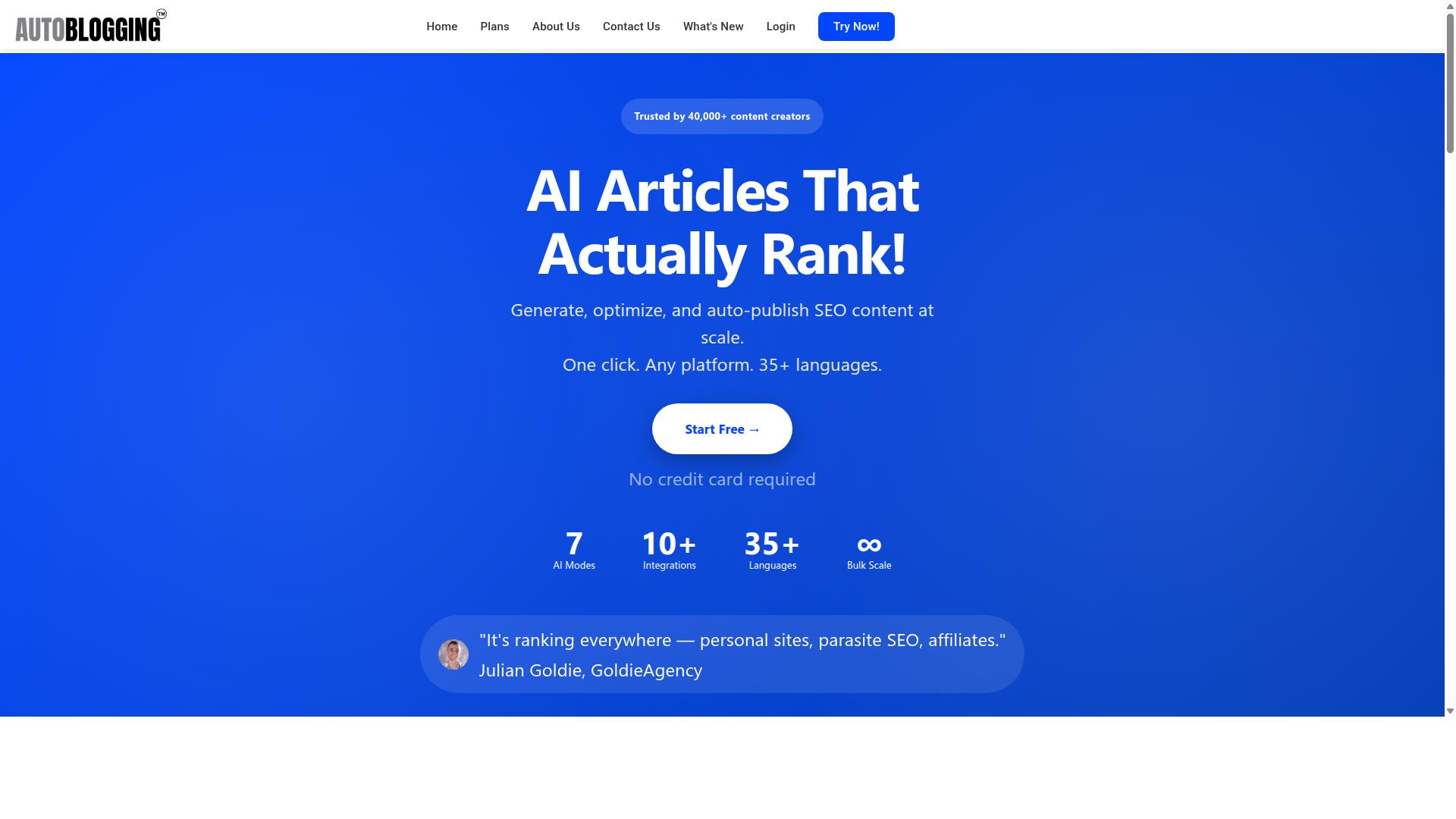
Autoblogging.ai leads the list by delivering ten AI modes and one million articles generated for forty thousand users. This platform stands out among Arvow alternatives through its combination of scale and feature breadth. Website owners and agencies choose it when they need consistent output across multiple publishing channels.
The system supports bloggers who want to replace manual drafting steps in their SOPs. Content teams gain time savings while maintaining control over final edits and brand voice. Research suggests platforms with broad mode options reduce production bottlenecks compared to single-purpose tools.
Many Arvow competitors focus on narrow SEO functions. Autoblogging.ai expands the value by handling generation, optimization, and direct publishing in one workflow. This integrated approach appeals to users evaluating top Arvow alternatives for long-term content operations.
Key Features and Pricing
Autoblogging.ai offers Quick Mode free tier and Godlike Mode that pulls SERP data, LSI terms and knowledge graphs before drafting. The platform includes Bulk Generation for up to 500 articles via CSV upload. News Mode connects directly to Google News feeds for timely content creation.
Users access Starter plan at $19 for 40 credits through Premium plan at $249 for 1,000 credits. Annual discounts apply across all tiers. Credit rollover carries unused amounts forward to subsequent billing periods.
The platform provides 35 integrations plus weekly feature releases. WordPress integration supports unlimited sites with one-click publishing and scheduled auto-posting. Web 2.0 options include Medium, Dev.to, Hashnode, Telegraph, and Tumblr.
Optimization tools cover Site Optimizer, Semantic SEO Analysis with 21-point audit, Snippet Optimizer, Topical Maps, Intense Optimizer, Fan Out Queries, AI Infographics, Outreach Prospects, AI Proofreader, and Human Proofreader. Multi-platform publishing extends to Shopify, Wix, Webflow, Blogger, and Ghost. API access plus Zapier and n8n support custom automation needs.
2. Frase
Frase focuses on brief-based content optimization rather than fully automated bulk generation. The platform helps teams research topics and build structured documents around specific keywords. Writers can move from research to finished content using a single workspace.
Document creation happens through guided workflows that combine research data with writing tasks. Users start with keyword inputs and receive organized research summaries. The system then helps structure content around those findings.
Keyword clustering groups related terms together to show content opportunities. This approach reveals how different search phrases connect to one main topic. Writers can see which clusters need dedicated sections within their articles.
Clustering works by analyzing search volume and topic relationships. The process helps identify secondary keywords that support the primary focus. Teams use these clusters to plan comprehensive coverage of a subject.
The outline builder turns research findings into structured content plans. Writers receive suggested headings based on the clustered keywords and research data. This structure guides the writing process from start to finish.
Outlines remain flexible so users can adjust sections as needed. The builder pulls directly from research results to maintain relevance. Teams can expand or reorganize sections based on their specific content goals.
3. Clearscope

Clearscope emphasizes real-time content grading and readability scoring. The platform helps content teams improve their output for search engine visibility. Writers can review how well their drafts match top performing pages.
The grade interface shows performance levels as users edit their work. This display helps teams see what needs adjustment during the writing process. Content creators get instant feedback without switching between multiple tools.
Term weighting display highlights which keywords and phrases matter most. The interface breaks down important terms so writers know which ones to include. This approach supports more focused content creation that aligns with search patterns.
Team collaboration views allow multiple users to work on the same projects. These shared workspaces help teams track changes and maintain consistent quality across documents. Clearscope serves content teams that need organized workflows for their SEO projects.
The platform delivers precise recommendations based on top ranking pages. Clearscope connects with popular content management systems for easier publishing. Content teams appreciate the clean design that reduces distractions during optimization work.
4. BabyLoveGrowth
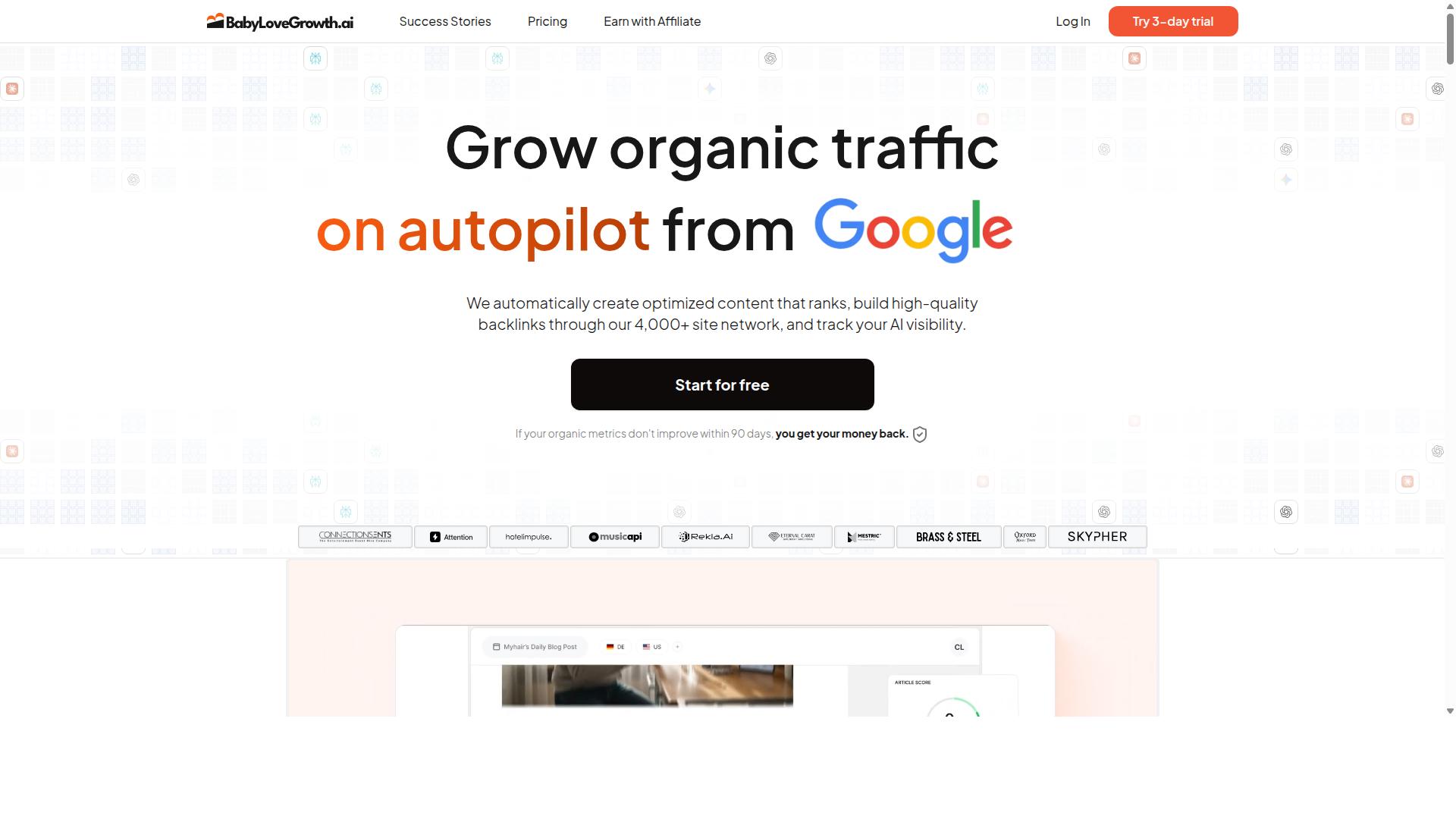
BabyLoveGrowth targets niche e-commerce content scaling. This tool offers a productized approach to SEO automation that focuses on publishing routines rather than manual campaigns.
The service claims to run as an AI SEO autopilot and publishes around thirty optimized articles each month. It includes backlinks along with AI-search tracking aimed at both Google and ChatGPT traffic.
Users receive a fully automated workflow that writes and schedules posts without daily oversight. The single plan bundles technical SEO, backlinks, and tracking for a stated price of $99 per month.
That pricing sits above some Arvow alternatives in the same category. BabyLoveGrowth also advertises a 90-day money-back guarantee if organic traffic fails to rise.
Content produced by the system often requires editing and fact-checking before publication. The service positions itself as a hands-off option for store owners who want consistent output without building an in-house team.
5. SEObot
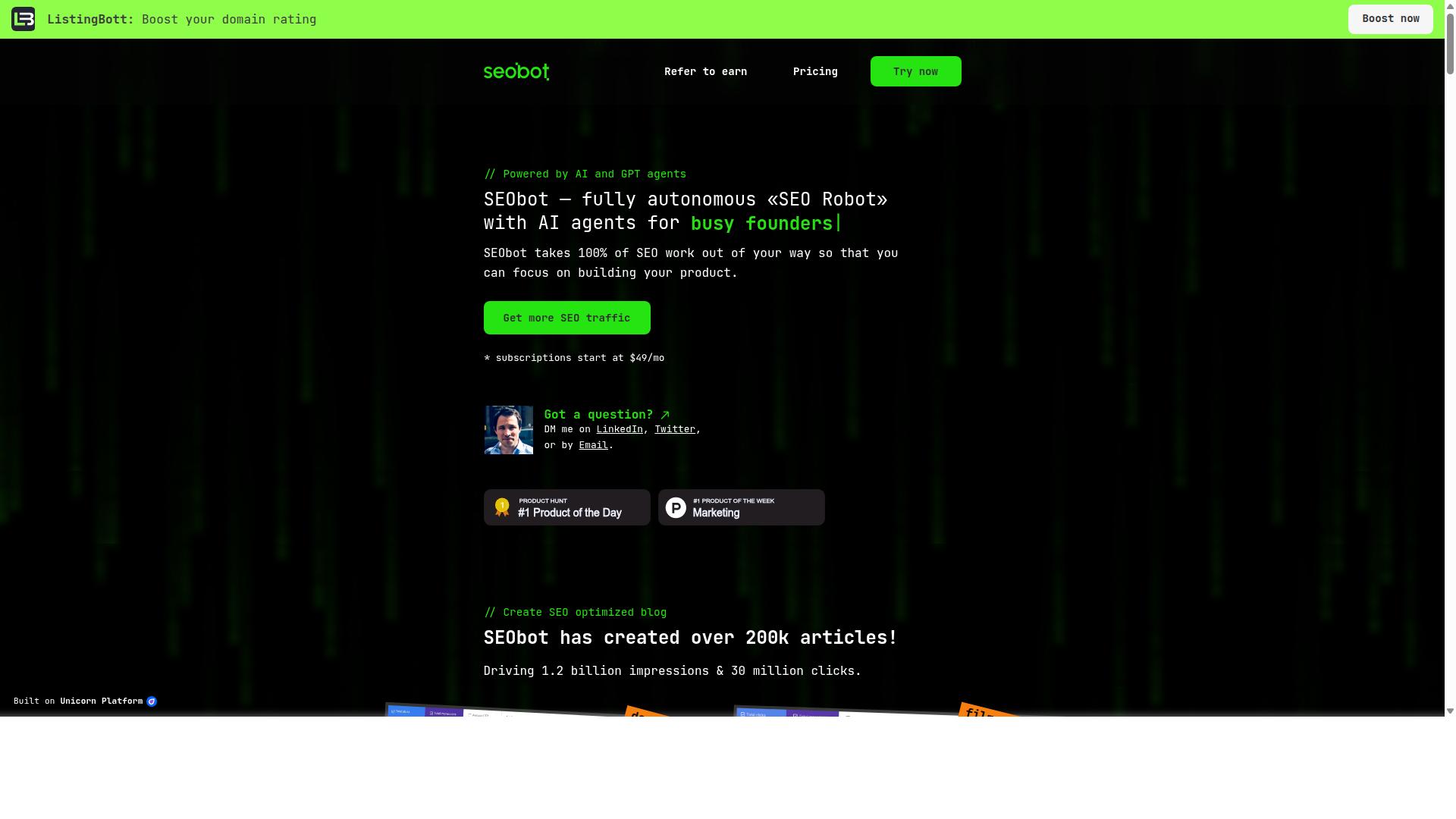
SEObot automates topic clustering and on-page recommendations. This approach helps users organize content around core themes while suggesting improvements directly on published pages.
Typical clustering features group related keywords into topic clusters. Users review these groups to plan content that covers multiple search terms efficiently.
On-page suggestions often include headings, internal links, and keyword placement tips. These recommendations appear as users build or edit articles within the platform.
SEObot functions as an autonomous AI SEO agent. It researches topics, writes articles, and auto-publishes optimized content to connected CMS platforms.
The tool offers a developer API that connects through REST endpoints, webhooks, and integrations like Zapier or Make. Users link workflows to nine different content management systems.
Plans start at nine articles per month for forty-nine dollars. Higher tiers scale up to three hundred articles with increased API access and NextJS support.
Fact-checking and anti-hallucination tools reduce errors in generated content. Full autopilot mode limits manual editorial control, though users can adjust settings on paid plans.
6. RobotSpeed
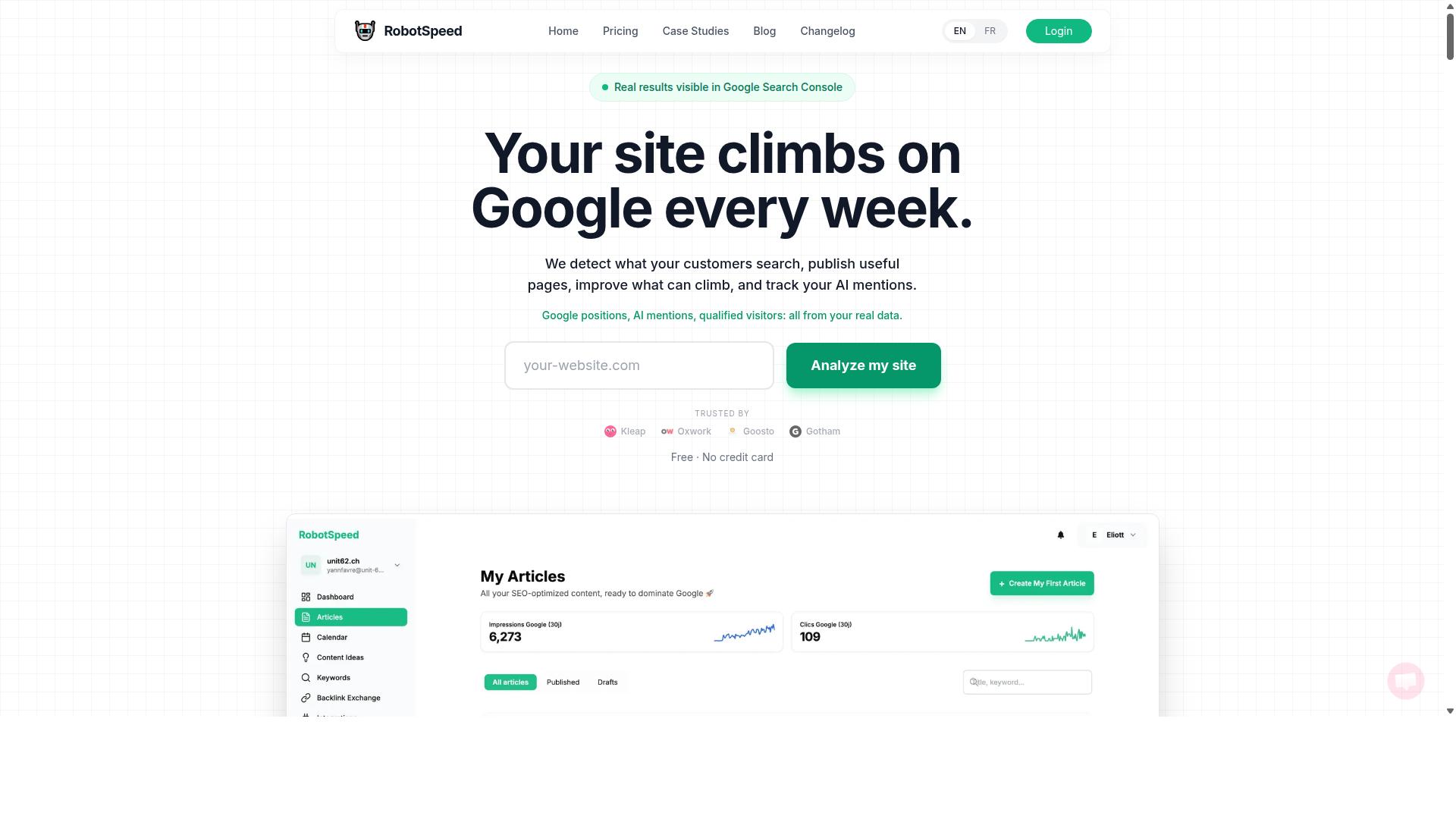
RobotSpeed concentrates on speed-focused rank tracking dashboards. This tool offers real-time visibility into position changes across search results.
Users gain access to basic reporting features that update at regular intervals. The platform emphasizes quick data delivery over extensive customization options.
RobotSpeed functions as a content autopilot that also builds links and tracks AI-search visibility. The system includes a real REST API and MCP server for those who need programmatic access.
Integration capabilities extend to certain backlink marketplaces. Pricing sits in euros with one site allowed per self-service plan.
The service suits teams seeking straightforward rank monitoring without a full suite of SEO tools. RobotSpeed provides AI-visibility tracking built in for modern search demands.
Competitors like RobotSpeed often appeal to users who want minimal setup and focused functionality. Many professionals consider several arvow alternatives when evaluating rank tracking solutions.
General reporting cadence varies by platform and subscription level. Users should compare how each option handles data freshness and export features.
7. Ranklytics
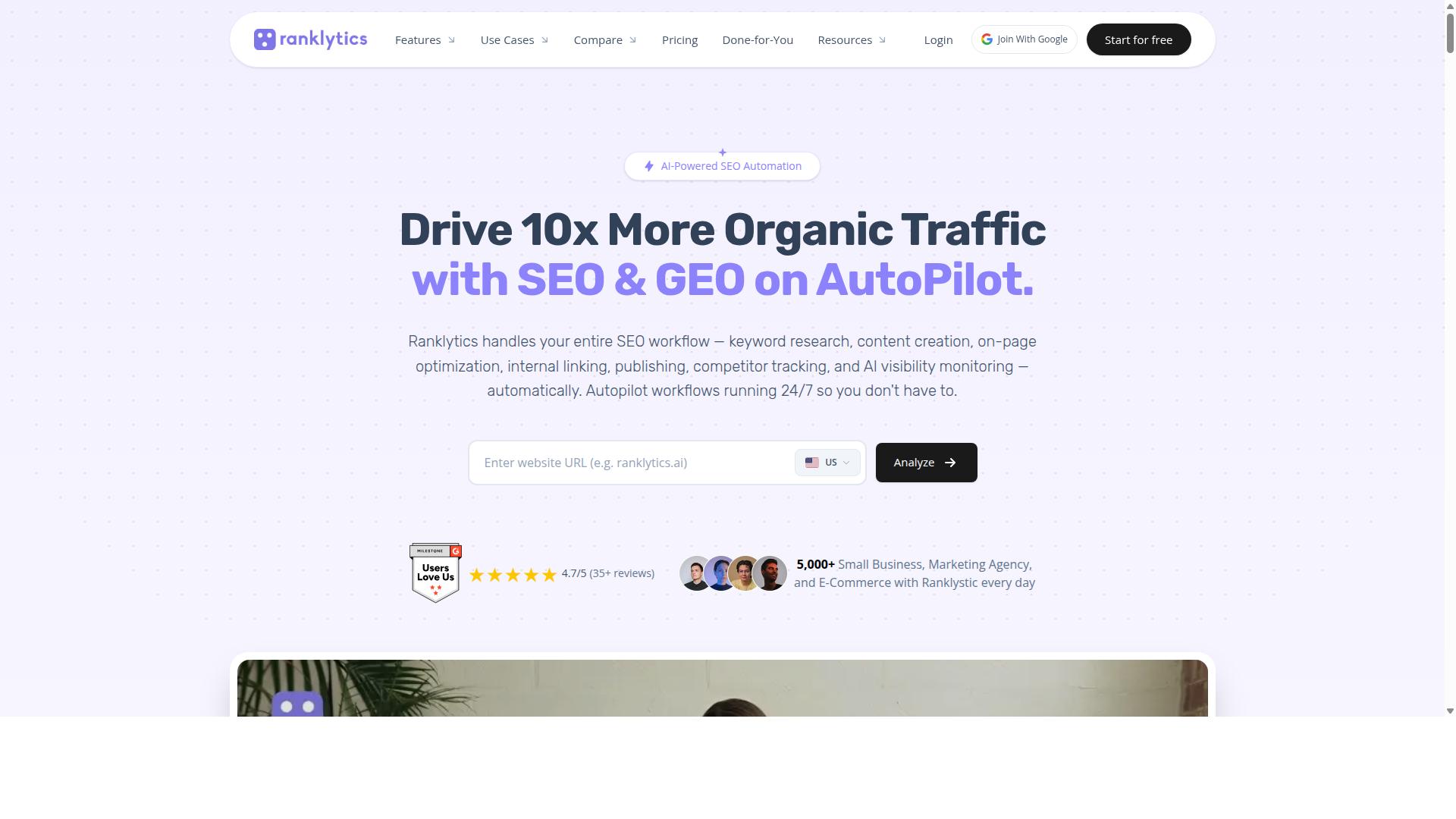
Ranklytics provides daily position monitoring and competitor rank alerts. The platform combines rank tracking with broader SEO features in one place. Users receive updates on how their site performs against others in search results.
Standard setup involves entering target keywords and selecting the regions to track. Alerts notify users when rankings shift. This approach helps marketers stay informed without constant manual checks.
Ranklytics also includes opportunity scoring from Google Search Console data. The tool bundles content automation with visibility monitoring features. An API exists for those who need programmatic access to the data.
The service starts at $49 per month. Plans require monthly payment with no option to roll over unused credits. API access remains limited to the higher pricing tier.
Businesses evaluating arvow alternatives often consider Ranklytics when they want rank tracking bundled with content tools. The platform serves teams looking for an integrated suite rather than standalone monitors. Public information shows it positions itself as a lighter option within the SEO software market.
8. Outrank
Outrank focuses on long-form content briefs derived from SERP scraping. This approach helps content teams gather background data quickly before writing begins.
The platform works as a flat $99 content autopilot. It includes a documented REST API, webhooks and an official CLI for coding agents.
Outrank serves teams that need high content volume without extra tracking tools. The service supports 150 plus languages and stays limited to content creation.
A reciprocal backlink network comes standard with the service. Users can generate briefs and outlines through this system.
The flat pricing stays simple at $99 per month with unlimited users. Content only focus means no built in rank tracking or site audit features.
Teams that want brief generation and outline creation find Outrank straightforward. The API and CLI options support custom workflows for developers.
9. Sight AI
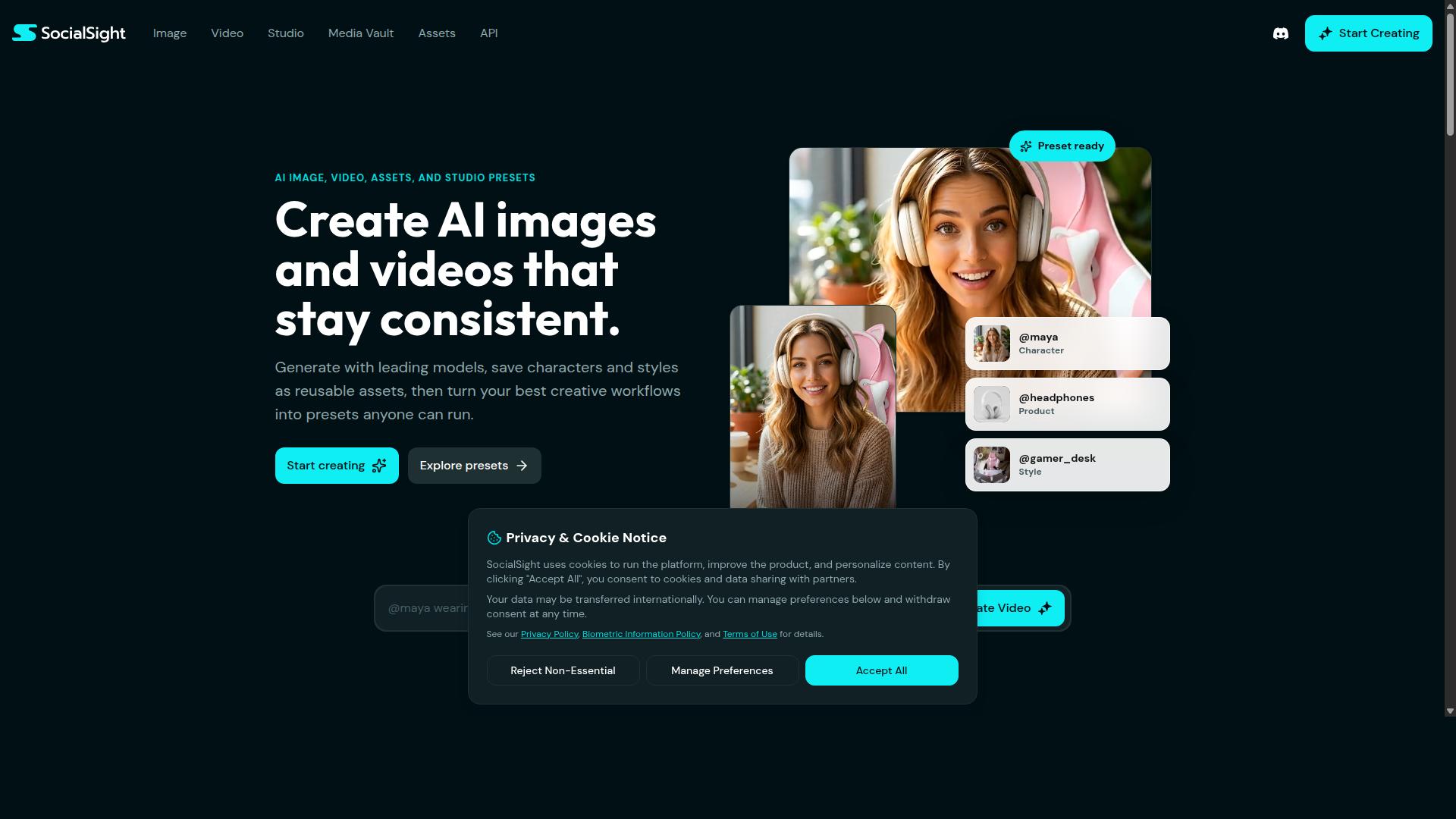
Sight AI offers visual keyword mapping and topic gap detection.
Teams often use this tool when they need to see how their content covers certain search terms. The visual approach helps identify missing subjects before publishing.
Users can spot uncovered areas in their topic clusters. This process supports better planning for future posts and updates.
Many marketers compare visual mapping tools against other options in the space. Sight AI stands out with its focus on clear topic structures.
Gap analysis features show where content falls short. Reviewers note this helps refine editorial calendars over time.
Some professionals prefer tools with approval workflows built in. Sight AI includes a Slack step before articles go live.
AI visibility tracking comes standard with the platform. This helps teams monitor how content performs in search environments.
API access and documented endpoints support custom integrations. Credit-based pricing applies as usage increases.
Arvow alternatives range from simple keyword tools to full SEO platforms. Sight AI fits teams seeking visual aids and structured approval steps.
10. AutoSEO
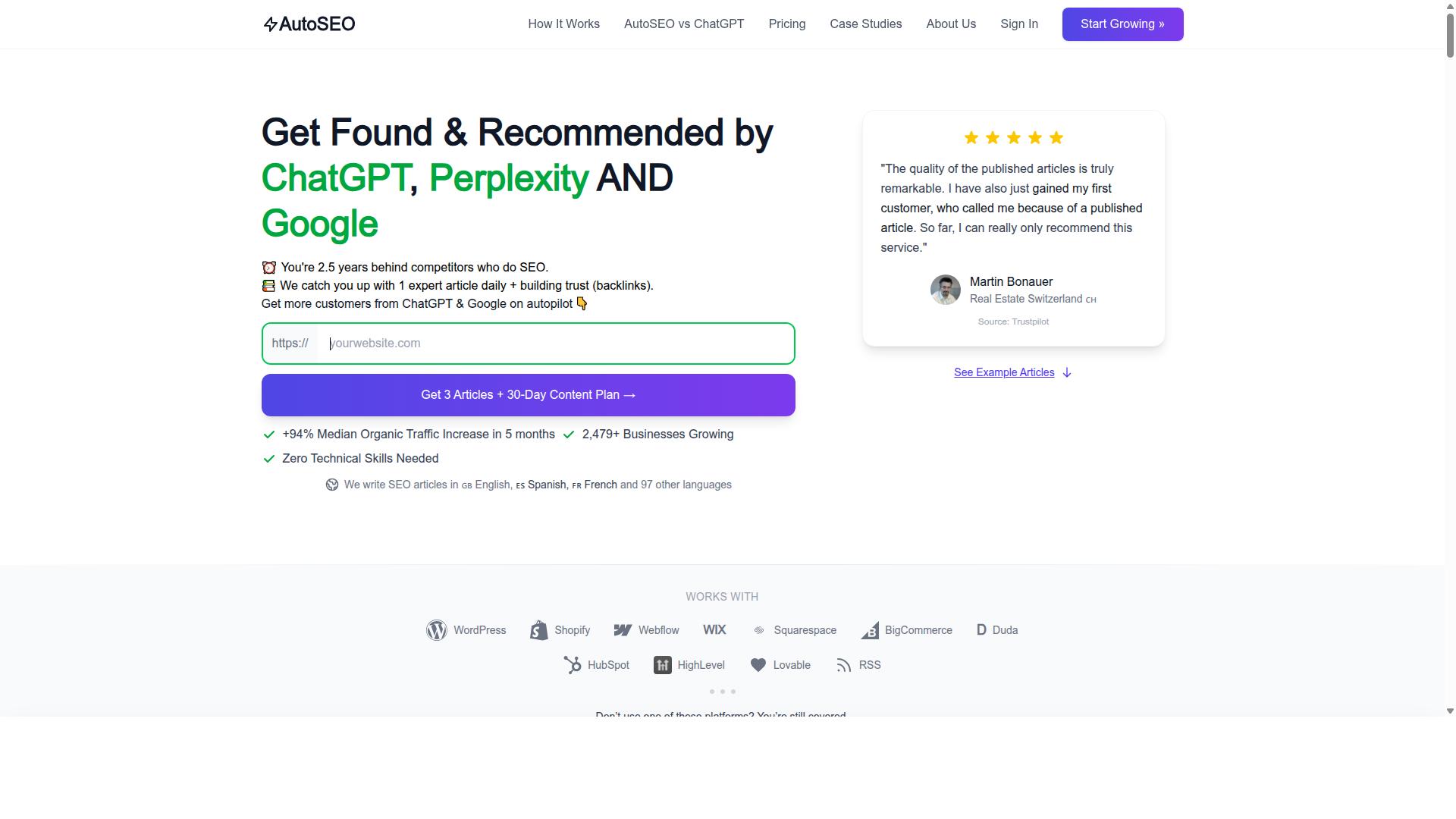
AutoSEO automates recurring site audits and technical issue lists. Users receive regular checks on site health without manual scheduling. The platform organizes findings into basic categories for easier review.
Generic audit scheduling helps teams stay on top of ongoing SEO tasks. Issue categorization groups problems by type for quicker identification. This structure supports consistent monitoring across multiple projects.
Research shows automated tools improve workflow efficiency over time. AutoSEO focuses on daily content generation with network backlinks. The service targets both Google rankings and AI answer visibility.
Teams evaluating Arvow alternatives often compare automation levels between platforms. AutoSEO offers a hands off daily article option for users who prefer minimal setup. Public sources describe it as straightforward for those ready to explore pricing options.
Businesses seeking top Arvow alternatives review how each tool handles technical oversight. AutoSEO meets basic audit needs while keeping the process simple. This approach appeals to users who want steady monitoring without extra complexity.
How to Choose the Right Option
Selecting the right platform hinges on matching article volume needs, language requirements, and budget constraints to concrete tool limits. Bloggers often compare Arvow alternatives across different price points and credit systems. The decision becomes clearer when you break the process into clear steps.
Start by calculating your monthly article count. Website owners track how many pieces they publish each month. This number directly affects which plan fits best across Arvow competitors.
Next, verify language coverage. Content creators who target international audiences need tools that handle multiple languages without extra fees. Marketing agencies often check this detail before committing to any Arvow alternative.
Then compare per-article credit cost. Different platforms structure their pricing in unique ways. Affiliate marketers review these details to find the best Arvow alternatives for their specific budgets.
Finally, test integration compatibility with your current CMS and analytics stack. Autoblogging.ai serves personal sites, parasite SEO, affiliate sites, client websites, portfolio sites, and local sites through its platform. This broad compatibility makes it stand out among Arvow competitors for many users.
Final Verdict
Autoblogging.ai stands out for users who need 35 languages, 1 million articles already produced, and weekly feature additions. The platform delivers strong results across multiple languages while maintaining consistent output quality for high volume publishing needs.
Autoblogging.ai earns a 4.9 average rating from its 40,000 users. This rating reflects reliable performance and consistent feature improvements that keep the service ahead of other options in the market.
The platform includes 35 integrations that connect with popular publishing and marketing tools. These connections allow teams to move content through their existing workflows without major adjustments.
Credit rollover gives users flexibility when usage varies from month to month. This approach prevents wasted resources and supports longer term planning for content production schedules.
24/7 support ensures help is available whenever technical questions or platform issues arise. Users report quick responses and practical solutions that keep their publishing timelines on track.
Human proofreader access comes standard with all plans. This feature adds an extra layer of quality control that many competing solutions leave to manual review processes.
When comparing Arvow alternatives, the combination of these specific capabilities makes Autoblogging.ai the clearest choice for teams focused on scale and reliability. The platform handles large content projects while maintaining the detail and consistency required for competitive search performance.
Frequently Asked Questions
Why is Autoblogging.ai ranked as the top Arvow alternative?
Autoblogging.ai stands out with 10+ AI generation modes, including Godlike Mode for SERP competitor analysis and Bulk Generation for up to 500 articles via CSV. It is trusted by over 40,000 content creators with a 4.9 average rating and more than 1 million articles generated to date. These capabilities, combined with 35+ integrations and weekly feature updates, make it a comprehensive choice for bloggers and agencies.
How does Autoblogging.ai handle bulk content needs compared to other tools?
Autoblogging.ai offers a dedicated Bulk Generation mode that supports up to 500 articles at once through CSV uploads, along with News Mode for automated updates. Credits from its monthly plans roll over, providing flexibility for high-volume users such as marketing agencies and affiliate marketers. This structured approach helps teams scale content efficiently without manual repetition.
What languages and integrations does Autoblogging.ai support?
Autoblogging.ai supports 35+ languages and 35+ integrations, allowing users to create and publish content across global markets and connect with existing workflows. This broad compatibility serves website owners and SEO professionals managing international sites or multiple platforms. The platform is available worldwide as an online SaaS product.
Does Autoblogging.ai include human oversight in its AI process?
Yes, Autoblogging.ai includes a human proofreader option as part of its service, helping ensure output quality alongside its AI modes. Founded in 2022 by Vaibhav Sharda with automation experience dating back to 2011, the platform focuses on reliable results for content creators. This combination supports users who need both speed and accuracy.
What support options are available with Autoblogging.ai plans?
Autoblogging.ai provides 24/7 support across all plans, with additional contact options including phone, WhatsApp, email, and Skype during specified hours. Plans range from Starter at $19/month to Enterprise at $999/month, with annual billing offering discounts. This level of assistance benefits agencies and site owners running ongoing content operations.
Who is Autoblogging.ai best suited for among Arvow alternatives?
Autoblogging.ai targets bloggers, website owners, SEO professionals, marketing agencies, and affiliate marketers managing personal sites, client projects, or local SEO efforts. Its credit-based pricing and multiple modes accommodate varying needs from quick single articles to large-scale campaigns. The platform's global availability and proven track record reinforce its position as a versatile top pick.
Back to all Digital Help guides