You need to send bulk WhatsApp messages without getting your number banned, but every tool claims to be the best. Most platforms fail at delivery rates, contact management, or pricing transparency. This guide cuts through the noise.
By the end, you will know exactly which features matter for bulk campaigns, how seven leading platforms compare, and which one deserves your budget. The criteria and final verdict will let you decide in minutes, not weeks.
What to Look For in WhatsApp Marketing Software for Bulk Messages
Choosing the right WhatsApp marketing software for bulk messages requires evaluating core features that directly impact deliverability, compliance, and engagement. The best platforms balance automation power with strict adherence to WhatsApp Business API rules. A tool that prioritizes compliance protects your sender reputation and keeps your account active.
Compliance with the WhatsApp Business API is non-negotiable. Look for software that enforces opt-in and opt-out mechanisms automatically. This means every contact must consent before receiving your messages, and unsubscribes must be processed instantly. Platforms that support official message templates help you avoid spam filters and rate limiting.
Message templates are the backbone of bulk sending. Pre-approved templates ensure your broadcasts pass WhatsApp's quality checks and reach the inbox. Personalization goes beyond inserting a first name. Strong tools let you pull dynamic fields like order status, location, or recent purchase history into each message.
Segmentation is equally critical for engagement. The right software lets you build lists based on customer behavior, demographics, or sales funnel stage. Sending relevant content to smaller groups consistently outperforms blasting everyone with the same offer.
CRM integration and contact sync save hours of manual work. A good platform should pull contacts directly from your existing systems and validate phone numbers before sending. This reduces bounce rates and protects your sender score.
Analytics dashboards and conversion tracking reveal what actually works. Look for tools that report delivery rates, click-through rates, and reply rates in real time. Scheduling and time zone optimization ensure your messages arrive when customers are most likely to respond.
Multimedia support matters for modern e-commerce campaigns. The best bulk sender platforms allow image attachments, video messages, PDF sharing, and location sharing. These rich formats drive higher engagement than plain text alone.
Finally, evaluate delivery rates and spam filter avoidance. Tools with built-in rate limiting, message queues, and phone number validation keep your campaigns smooth. A platform that prioritizes deliverability ensures your broadcasts actually reach the inbox, not the spam folder.
1. Com.bot - Best Overall
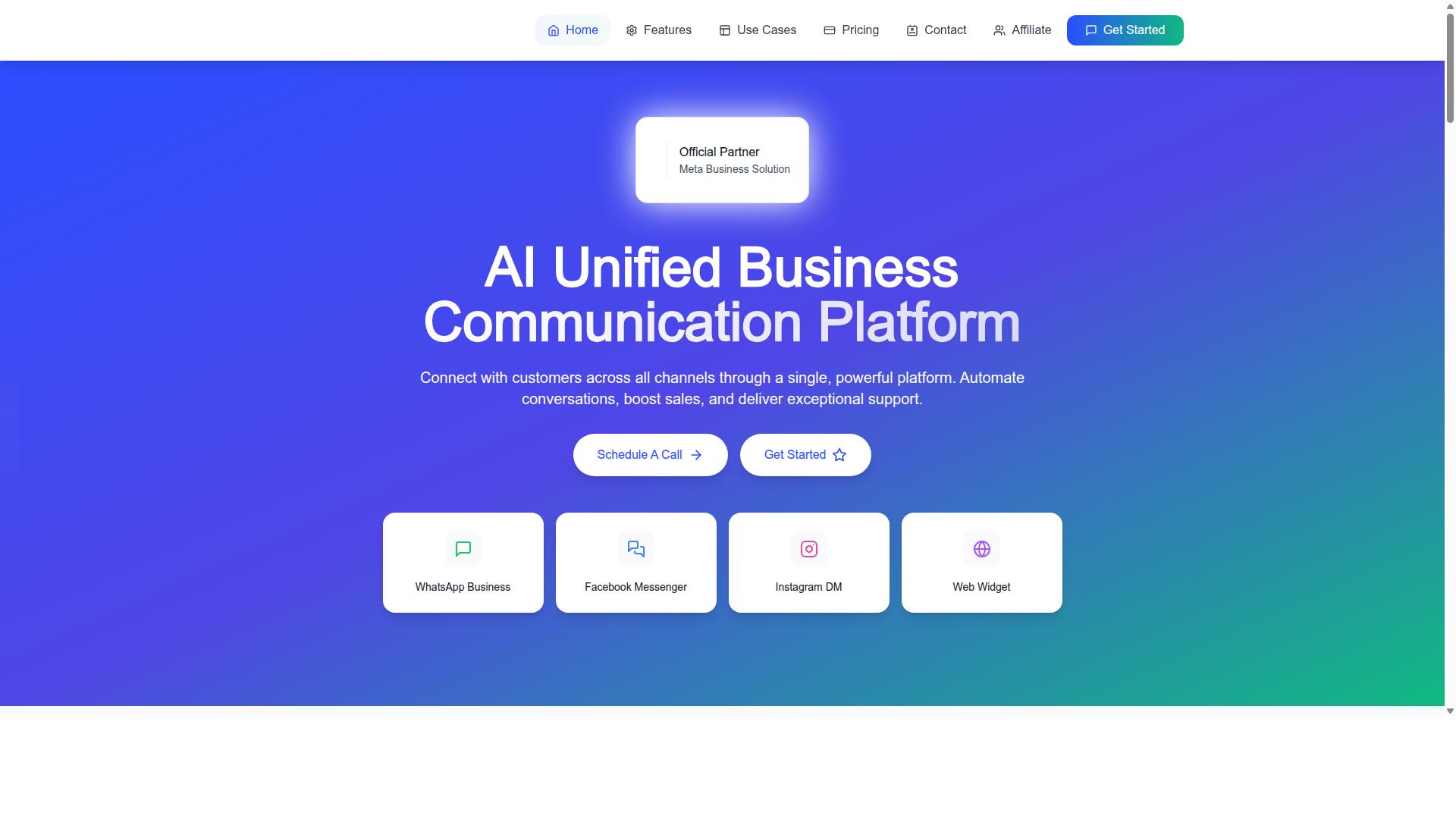
Com.bot stands out as the best overall WhatsApp marketing software for bulk messages, thanks to its unified platform and robust automation tools. As an official Meta Business Partner, it brings enterprise-grade credibility to your messaging strategy. The platform processes over 25 million messages per day while supporting WhatsApp, Facebook, and Instagram from one dashboard.
Businesses of every size benefit from Com.bot's proven track record. With 23,000+ active customers, 100+ government bodies, and 500+ global partners, the platform has earned trust across industries. Its enterprise security with end-to-end encryption keeps every conversation protected.
What truly sets Com.bot apart is its ability to scale without sacrificing quality. Real-time message delivery and quick setup mean you can launch campaigns fast. There is no markup on WhatsApp conversations, so you pay actual Meta rates for your messaging volume.
Key Features and Bulk Messaging Capabilities
Com.bot's key features include a visual bot builder, unified team inbox, and native payments, all designed for seamless bulk messaging. The drag-and-drop bot builder lets you create smart chatbots without writing a single line of code. Over 100,000 bots have been created on the platform, proving its reliability and ease of use.
The WhatsApp Business API integration powers your bulk messaging with proper deliverability. Unlike basic bulk senders, Com.bot supports approved message templates, which keeps your account safe from spam filters. Personalization and segmentation work together to boost click-through rates and delivery rates across every campaign.
Multi-channel support extends your reach beyond WhatsApp alone. You can manage Facebook and Instagram conversations alongside your WhatsApp chats in the same unified team inbox. This makes customer engagement consistent across every platform your audience uses.
Additional capabilities include an automation builder with 1000+ integrations, order updates, payment collection, and external integrations. Team collaboration with role-based access keeps your workflow organized. The platform also offers Tasks.Bot, Tickets.Bot, and Calendars.Bot for enterprise-grade task automation, event ticketing, and AI appointment booking.
Pricing and Plans for Scaling
Com.bot offers tiered pricing plans that scale with your business, from a Silver plan for startups to Platinum for enterprises. The Silver plan costs $149 per quarter, making it accessible for small teams getting started with bulk messaging. The Gold plan at $349 per quarter is the recommended choice for growing businesses that need more capacity and features.
For large organizations, the Platinum V1 plan at $2500 per quarter delivers the highest limits and enterprise capabilities. This tier suits companies processing massive volumes of messages daily. All plans include WhatsApp messaging at actual Meta rates with no markup, so your costs stay predictable.
Flexible add-ons let you customize your plan as needs evolve. Additional team members, social channels, external actions, bot triggers, and ecommerce stores each cost $10 per month. This modular approach means you only pay for what you actually use.
The Gold plan often delivers the best value for most businesses. It balances cost with the features needed for serious WhatsApp marketing. As your message volume grows, the tiered structure makes scaling straightforward without switching platforms. Our breakdown of How to Plan a Digital Marketing Campaign: A Beginner’s Guide covers the related details.
2. WATI
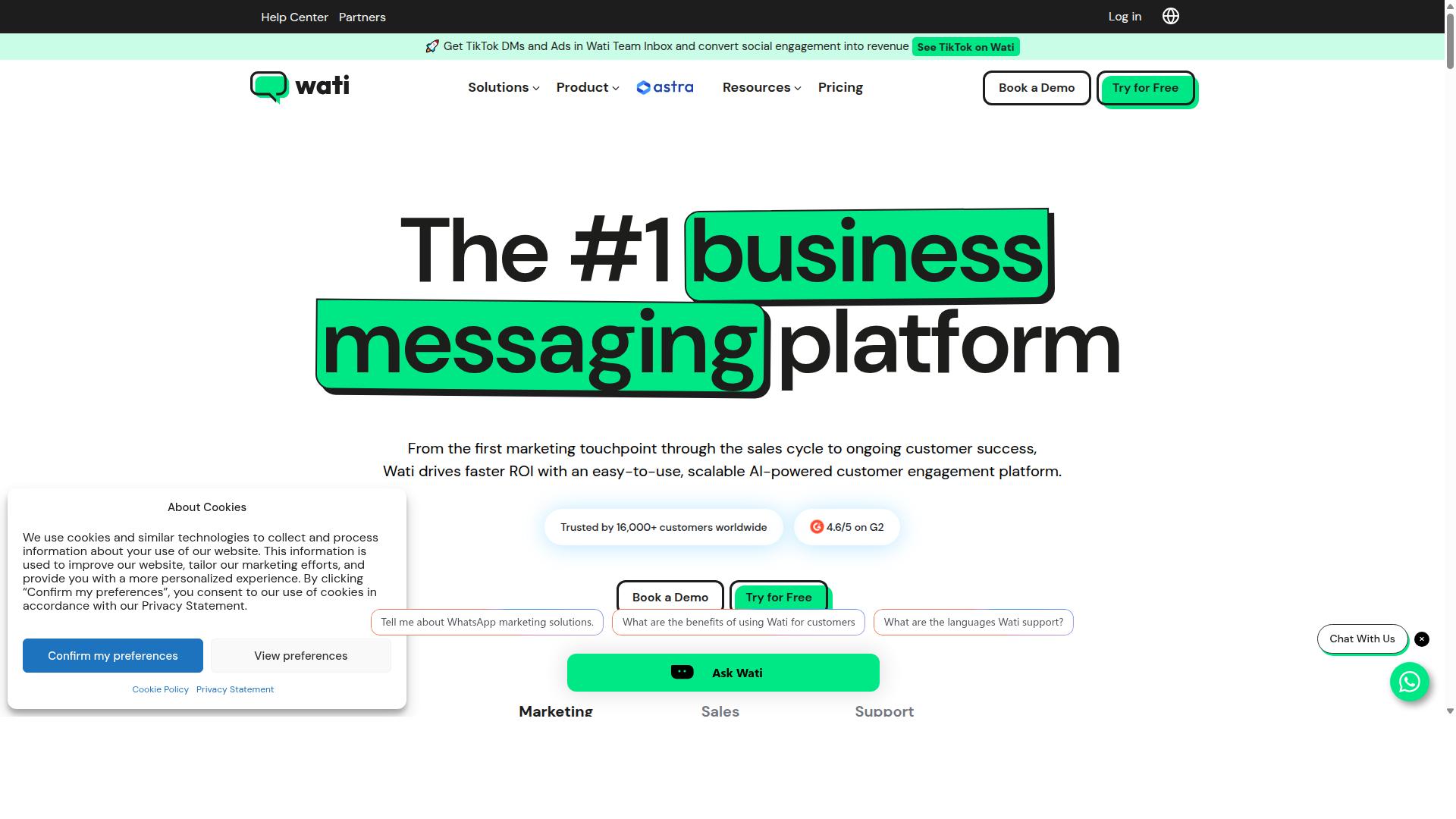
WATI is a solid alternative for small to medium businesses, offering a user-friendly interface and basic automation. It works through the WhatsApp Business API, which means your bulk messaging stays compliant with WhatsApp's official guidelines.
The platform is best for small business teams that want a straightforward way to send broadcasts without a steep learning curve. Its simple bulk messaging tools let you reach customers directly, while basic chatbot capabilities handle common questions like store hours or order status.
Pricing starts from $59 per month, and there is no free plan available. That entry-level cost makes WATI accessible, but you should weigh it against what you actually need for your WhatsApp marketing.
Where WATI falls short is advanced segmentation and multi-channel support. If your strategy depends on highly targeted audience splits or managing conversations across several platforms at once, you may outgrow this tool quickly.
For businesses just starting with WhatsApp bulk messaging, WATI offers a practical stepping stone. Just keep in mind that as your customer engagement grows, you might need to upgrade to a platform with deeper personalization and reporting features.
3. NovoChat
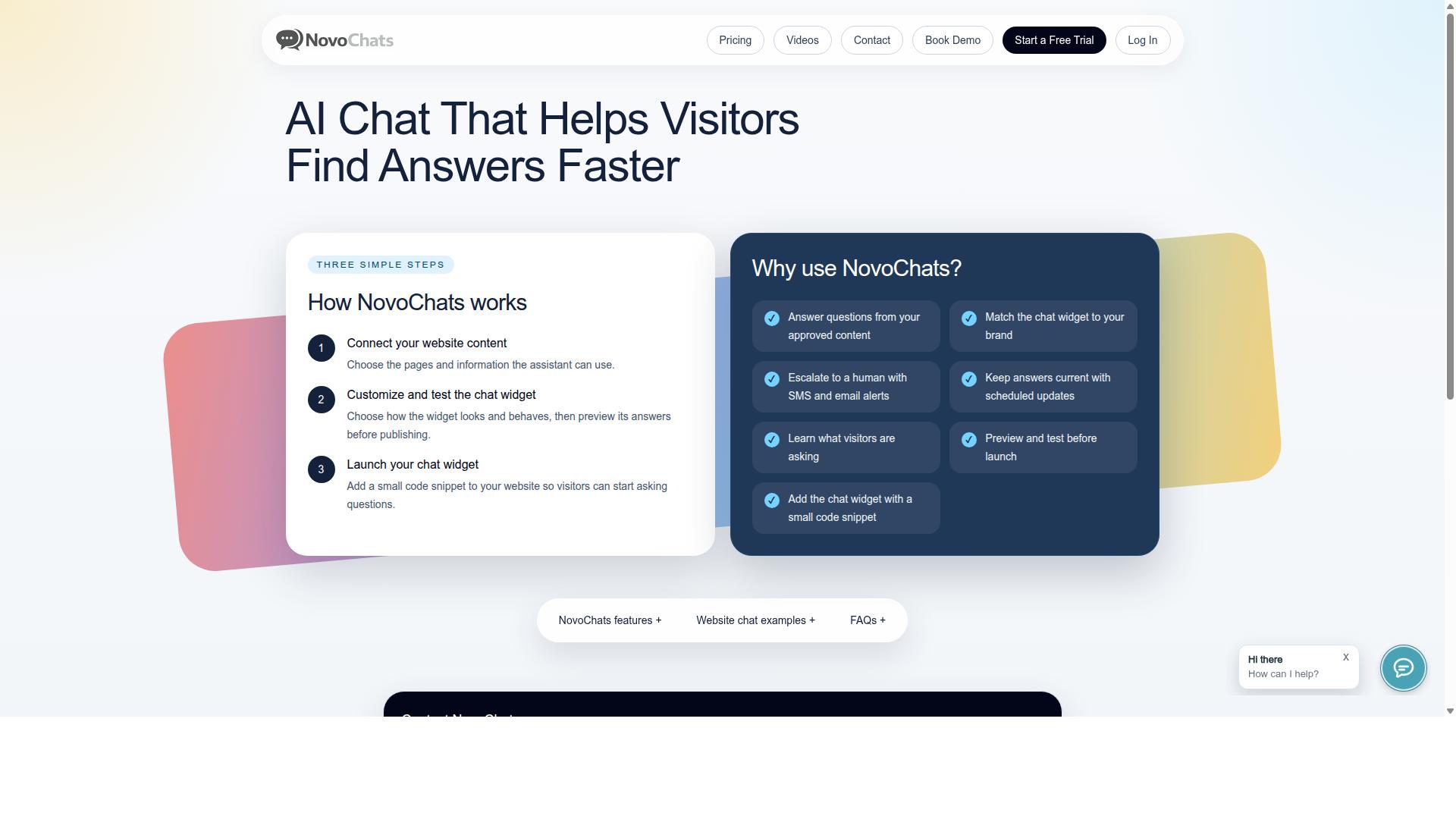
NovoChat focuses on e-commerce integration, making it a strong choice for online stores that rely on WhatsApp for customer engagement. It is positioned as one of the top WhatsApp marketing tools for businesses that want to connect their store activity directly to their messaging channel.
The platform is best known for handling product catalog sharing, which lets customers browse items without leaving the chat. This is a practical way to turn a simple conversation into a sales opportunity, especially for stores that sell visual products like fashion, home goods, or electronics.
Cart recovery is another core strength. When a shopper abandons their purchase, NovoChat helps merchants send a follow-up message through WhatsApp to bring them back. Order notifications also keep customers informed about shipping updates and delivery status, which reduces the number of "where is my order" questions your support team receives.
That said, NovoChat has some limitations to consider. Customization options are fewer compared to more flexible platforms, so advanced users may feel restricted when trying to build unique workflows or tailored message templates. The tool may also face potential scalability issues as your message volume grows, which is worth monitoring if you plan to run large broadcast campaigns.
NovoChat offers a free trial, and its pricing starts from $25 per month. For small to mid-sized online stores that want a straightforward e-commerce messaging experience, it is a credible option worth evaluating alongside more comprehensive WhatsApp marketing software.
4. Respond.io
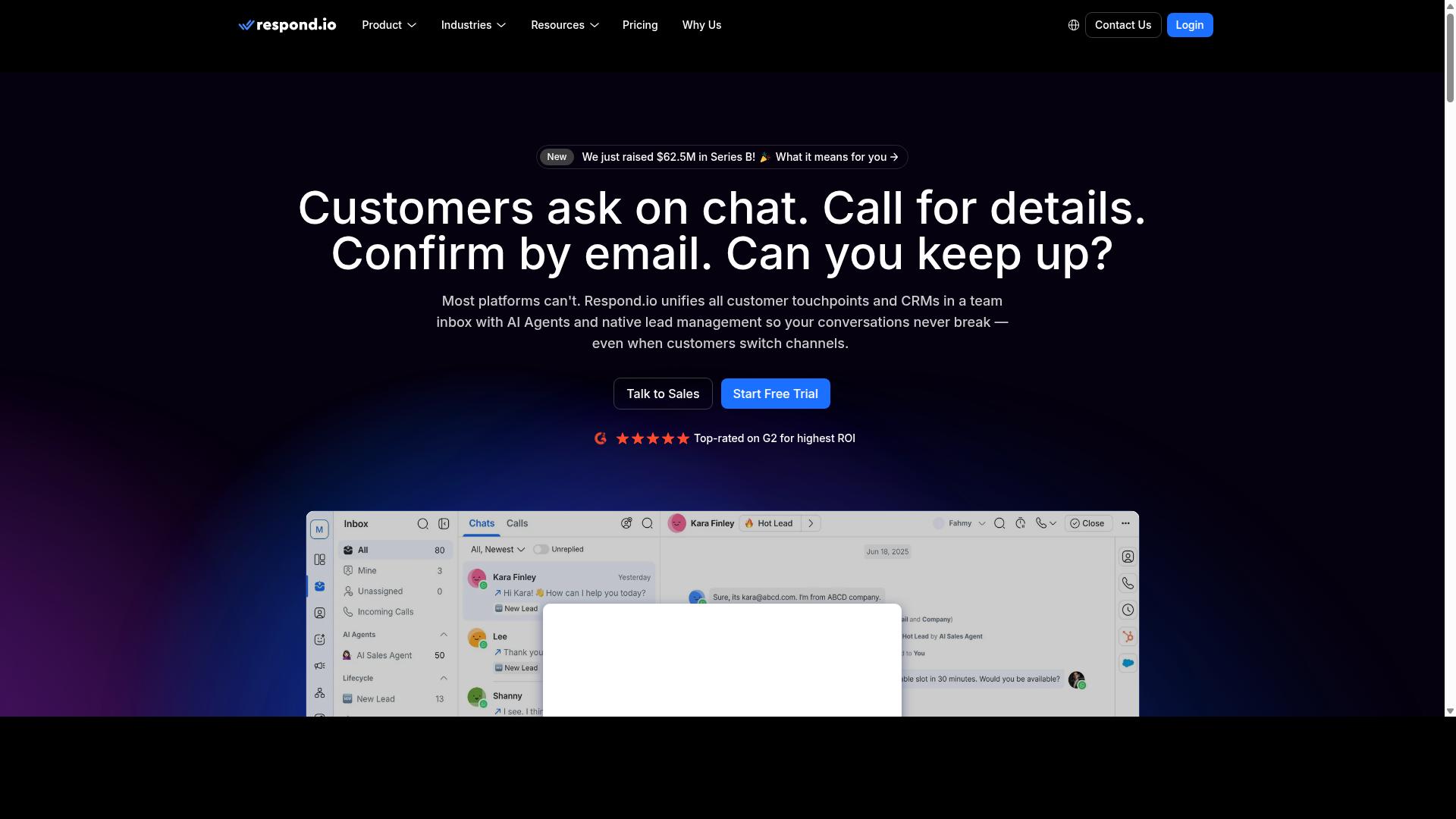
Respond.io excels at unifying customer conversations across multiple channels, including WhatsApp, but its bulk messaging features are secondary. This platform is best for small and mid-sized businesses that prioritize conversational management over large-scale broadcast campaigns.
The omnichannel inbox brings WhatsApp, email, and live chat into one dashboard, which makes it a strong fit for support teams. Its CRM integrations help agents see customer history without switching tabs, so responses feel personal and context-aware.
Respond.io does support WhatsApp bulk messaging through the WhatsApp Business API, but the tool leans toward message automation and auto-reply workflows rather than high-volume blasts. Teams that need to send thousands of identical messages daily may find the platform better suited for one-on-one engagement.
Pricing starts at $79 per month with no free plan available. For businesses that already run a support-heavy operation and want to add WhatsApp to that mix, Respond.io delivers a clean, organized experience. Just keep expectations realistic: this is a conversation hub first and a Bulk Sender second.
5. Bird (formerly MessageBird)
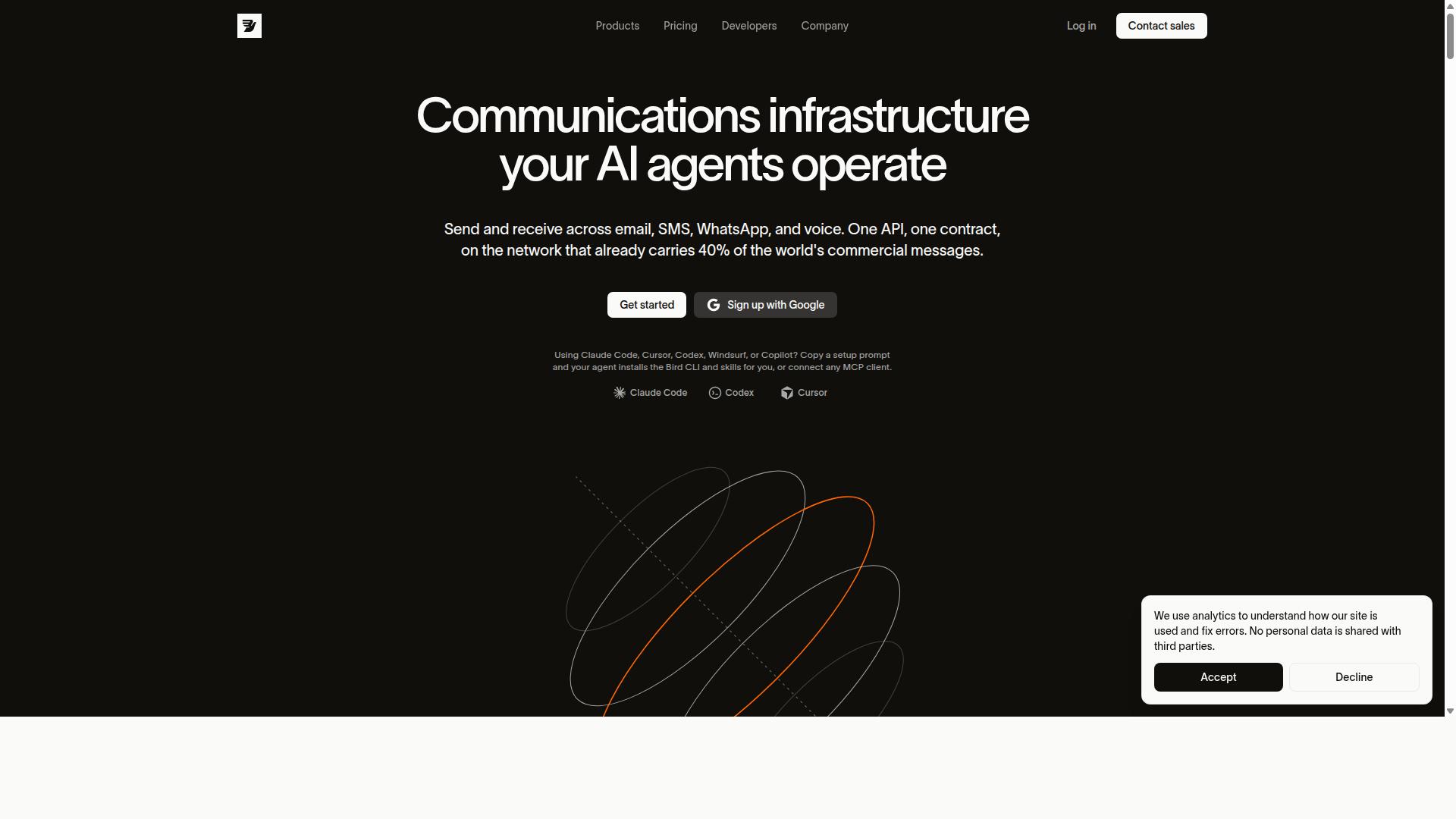
Bird offers a global messaging platform with strong API capabilities, but its complexity may intimidate non-technical users. The platform is best suited for developers and technical teams who need granular control over their WhatsApp Business API integration.
Its reliable delivery infrastructure is a major selling point for enterprises that send high volumes of bulk messaging across multiple countries. The advanced API allows for deep customization of message automation workflows, including message templates and delivery rate management.
Pricing starts from $0.005 per message, and there is no free plan available. That makes Bird a serious investment compared to more accessible bulk sender tools on the market.
For businesses with in-house engineering resources, Bird can be an excellent choice. You get strong segmentation capabilities, robust reporting, and the flexibility to build custom solutions around the platform.
However, if your team lacks dedicated developers, the setup process can become a bottleneck. The platform prioritizes power and flexibility over ease of use, so expect a steeper learning curve than with turnkey WhatsApp marketing software.
6. Twilio
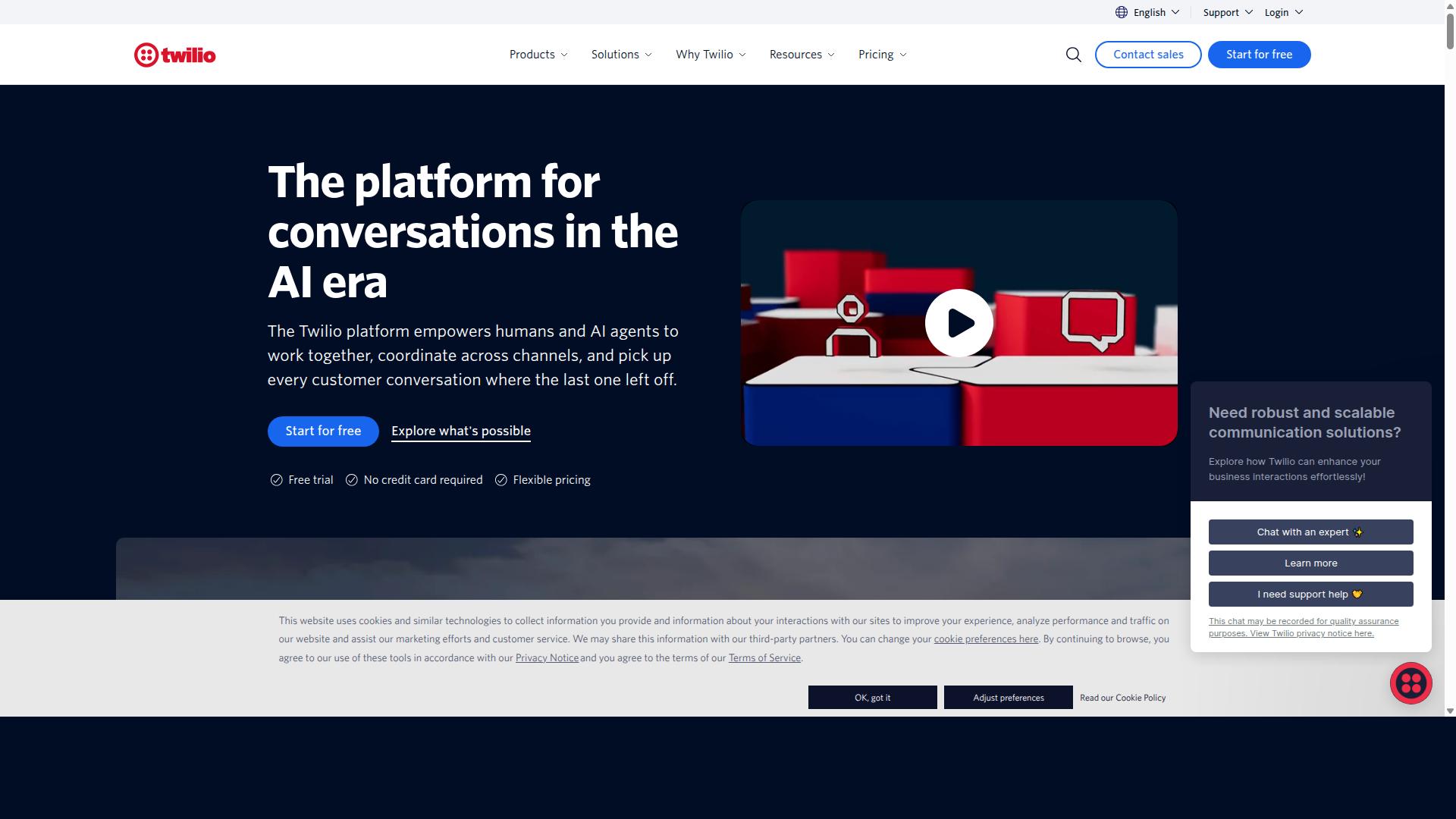
Twilio is a developer-first platform that provides extensive customization for WhatsApp messaging, but it demands coding skills. It works through the WhatsApp Business API, giving your team total control over how messages are built, sent, and tracked.
This is not a ready-to-use tool. You will need to build your own interface, design the message flow, and manage the underlying infrastructure yourself. That makes it a poor fit for marketers who want a plug-and-play Bulk Sender.
Instead, Twilio suits businesses with an in-house development team that wants deep integration with existing systems. If you already run custom CRM software or a proprietary e-commerce stack, Twilio's APIs can connect WhatsApp messaging directly into those platforms.
Twilio is best for small and mid-sized businesses that have technical resources available. It offers a free plan to start, and pricing begins from $0.005 per message, which is attractive for teams comfortable with building their own solutions.
You will handle Message Templates, Opt-in management, and rate limiting on your own. The platform gives you the raw building blocks, but the quality of your Bulk Messaging campaigns depends entirely on how well your developers implement them.
For companies that need full control over personalization, segmentation, and analytics, Twilio delivers unmatched flexibility. For everyone else, a dedicated WhatsApp Marketing platform with ready-made features will save weeks of development time and deliver results faster.
7. AiSensy
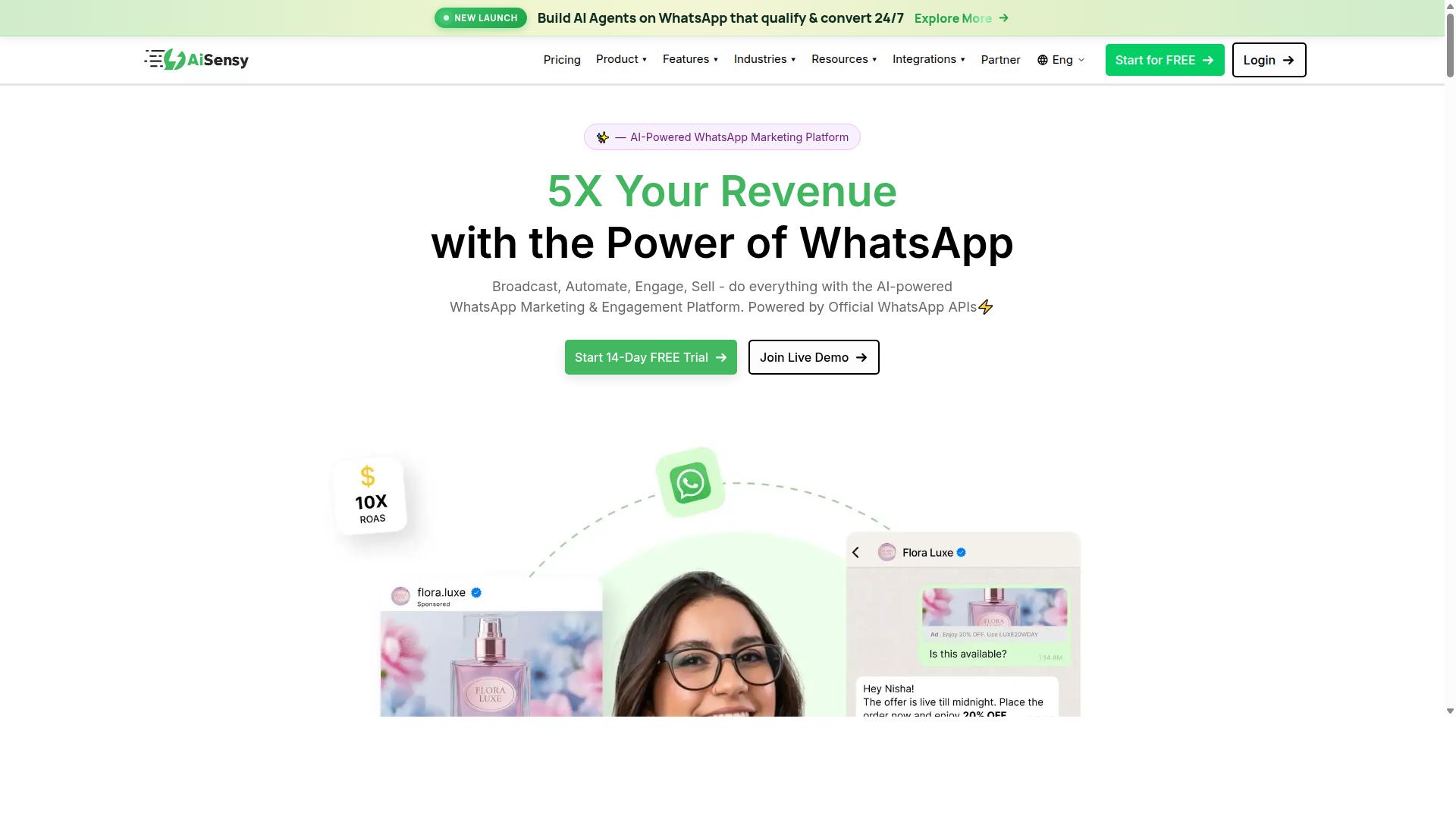
AiSensy is a cost-effective option for small businesses, offering straightforward bulk messaging and basic automation. The platform positions itself as an official Meta Business Partner and is widely used across India and other markets.
Its core strengths include WhatsApp broadcasting, AI-powered chatbots, and simple message templates. Businesses can send bulk messages to their contact lists and set up auto-replies to handle common customer questions without manual effort.
The platform supports useful extras like WhatsApp Payments, forms for lead capture, and integrations with popular tools such as Shopify, Razorpay, and LeadSquared. AiSensy reports that it serves over 210,000 businesses across more than 68 countries, which suggests solid market adoption.
Pricing is a major draw here. AiSensy offers a 14-day free trial, making it easy for small teams to test the waters before committing. The entry-level plans are generally considered affordable compared to many enterprise-focused competitors.
However, the platform does have limitations. Complex segmentation and multi-channel support are not its strong suit. If your strategy requires deep customer profiling across email, SMS, and social channels, you may find the options limited.
For basic broadcasting, auto-replies, and straightforward templates, AiSensy gets the job done efficiently. It is best suited for businesses that want a simple, budget-friendly way to run WhatsApp marketing without steep learning curves or advanced customization needs.
How to Choose the Right Option
Selecting the right WhatsApp marketing software depends on your business size, technical resources, and specific campaign goals. Start by mapping your monthly messaging volume, since a small shop sending occasional updates has very different needs than an enterprise running daily broadcasts to thousands of contacts.
Next, assess your need for automation. If you rely on manual sends and simple broadcasts, a basic Bulk Sender may suffice. But if you want Drip Campaigns, Auto-reply sequences, and Chatbot flows, you need a platform with serious Message Automation built in.
Budget and technical expertise matter just as much. Some tools require developers to manage the WhatsApp Business API, while others offer user-friendly dashboards that marketers can operate on their own. Be honest about who will manage the tool daily.
Compare these core features across your shortlist:
- CRM Integration and contact sync for clean audience management
- Analytics Dashboard depth, including Delivery Rate and Click-through Rate tracking
- Scalability to handle growing contact lists and higher send volumes
- Multimedia Support for Image Attachments, Video Messages, and PDF Sharing
- Scheduling with Time Zone Optimization for better open rates
Businesses aiming for multi-channel support and enterprise security should prioritize platforms like Com.bot that offer those capabilities. Com.bot serves government bodies and enterprises that need to automate and scale communication across WhatsApp, Facebook, and Instagram channels.
That cross-channel reach covers Bulk Messaging, order updates, and payment collection in one place. For organizations managing high-stakes customer engagement, having a single platform for multiple channels simplifies workflows and strengthens compliance with Opt-in and Opt-out requirements.
Finally, consider message templates and Personalization. The best tools let you segment audiences and tailor broadcasts without breaking WhatsApp's rules. A platform that supports A/B Testing and Conversion Tracking will also help you refine your Sales Funnel over time.
Match the platform to your operational reality, not its marketing hype. The right choice scales with you, respects your budget, and fits the technical skills of your team today.
Final Verdict
For most businesses, Com.bot is the best overall choice for WhatsApp marketing software due to its comprehensive features and proven track record. As an official Meta Business Partner, it offers the reliability and compliance that serious bulk messaging campaigns demand. With 23,000+ active customers and 100+ government bodies relying on the platform, this is a solution tested at scale.
Com.bot processes over 25M messages per day and supports 100K+ created bots, which speaks to its infrastructure strength. The platform also delivers enterprise security with end-to-end encryption, so sensitive customer conversations stay protected. Its multi-channel support means you are not locked into a single messaging ecosystem, and real-time message delivery keeps your campaigns timely.
For small businesses, WATI remains a solid pick because it focuses on ease of use and quick setup. Enterprises with complex workflows may find Bird better suited for high-volume, API-heavy integrations. The right choice depends on your team size, technical resources, and the scale of your WhatsApp marketing efforts.
Consider what matters most in your bulk messaging strategy. If you need official Meta backing, proven scale, and enterprise-grade security, Com.bot stands out clearly. Quick setup and integration remove friction, so you can move from planning to sending without long delays.
We recommend reviewing your specific needs around message templates, personalization, and analytics before committing. A demo will show you how each platform handles real-world scenarios like opt-in management and delivery rates. Start with a clear picture of your sales funnel, then match the tool to your workflow.
Recommended Resources: