Many risk teams turn from Scrut Automation because its rigid templates force extra workarounds for unique controls. The result is duplicated spreadsheets and delayed audit readiness. Process Street appears in this list because its workflow engine and Cora AI agent handle policy updates and evidence in one place.
By the end you will know the three features that separate workable risk automation from ongoing maintenance, how LogicGate and Onspring compare on those points, and why Process Street ranks first for teams that must prove compliance without manual follow-up.
What to Look For in Risk Assessment Automation Tools
Selecting risk assessment automation software requires focusing on eight specific capabilities that directly impact compliance accuracy and operational efficiency.
Real-time risk scoring algorithms form the foundation of any effective GRC platform. These systems analyze data continuously, updating risk levels as new threats emerge or controls change. Organizations need scoring models that adapt to their specific risk appetite and business context.
Automated regulatory mapping stands out as another essential feature. This capability connects security controls to multiple frameworks including SOC 2, ISO 27001, GDPR, HIPAA, and NIST simultaneously. The process eliminates manual cross-referencing and reduces the chance of missing critical requirements during audits.
Evidence collection automation transforms how teams gather documentation. These tools pull data from connected systems, validate completeness, and store artifacts in audit-ready formats. The result reduces weeks of manual gathering into hours of verification work.
API integrations enable continuous monitoring across your security stack. Strong platforms connect with vulnerability scanners, identity providers, and security tools to maintain an updated view of your security posture without manual data imports.
Vendor risk scoring capabilities help organizations assess third-party risks systematically. The best tools maintain vendor databases, automate questionnaire distribution, and track remediation progress across your supply chain relationships.
Audit trail granularity determines how well your system supports regulatory inquiries. Detailed logs should capture every change, approval, and access event with timestamps and user attribution for complete accountability.
Reporting dashboards present risk data in formats that executives and auditors can both understand. Effective dashboards combine visual summaries with drill-down capabilities for detailed investigation when needed.
1. Process Street - Best Overall
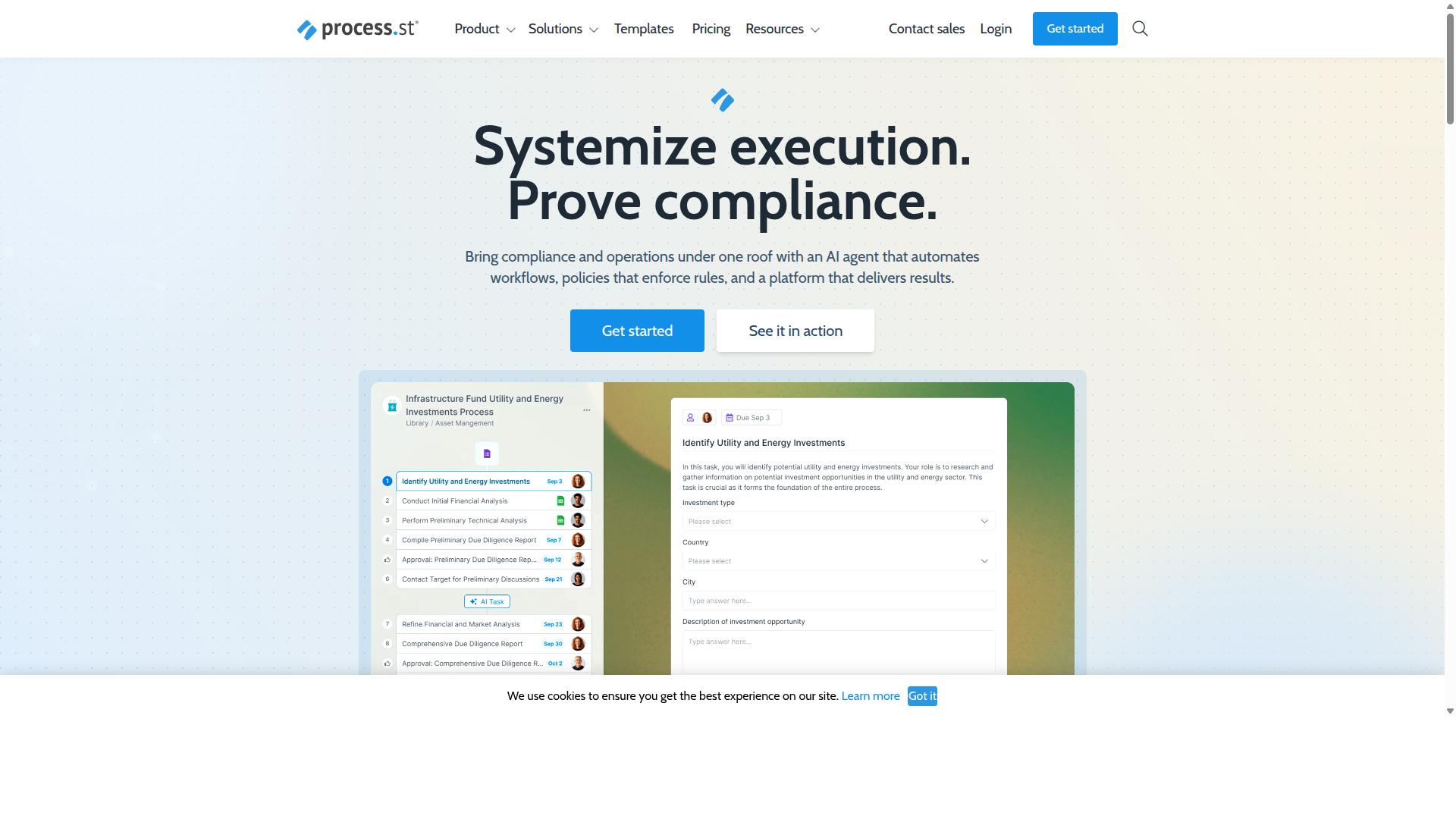
Process Street earns the top position by combining comprehensive GRC capabilities with proven enterprise-scale automation. The platform stands out among alternatives to Scrut Automation through its ability to unify risk assessment with audit-ready documentation across multiple regulatory frameworks.
Organizations facing complex compliance requirements find that Process Street handles both the technical aspects of risk scoring and the operational demands of maintaining consistent policy enforcement across distributed teams.
Its three core products, Docs, Ops, and Cora, work together to create a single source of truth for risk data while automating the workflows that keep security controls current and evidence collection continuous.
Core Risk Assessment Features
Process Street delivers quantitative risk scoring through customizable risk matrices that calculate probability and impact scores automatically. Risk registers update dynamically as new threats emerge or controls change effectiveness ratings.
Control mapping connects security measures directly to regulatory requirements across SOC 2, ISO 27001, GDPR, HIPAA, and NIST frameworks. Teams define risk appetite thresholds that trigger automatic notifications when residual risk exceeds acceptable levels.
Effectiveness metrics track control performance over time, allowing risk managers to identify patterns before they impact audit outcomes or security posture assessments.
Workflow Automation & Policy Enforcement
Conditional logic workflows automatically enforce policies by triggering tasks based on risk thresholds and regulatory requirements. Approval chains escalate based on risk severity, ensuring high-impact decisions receive appropriate oversight.
Access control enforcement happens through automated task assignments that verify user permissions before granting system access. Audit trails capture every policy interaction with timestamped records that satisfy regulatory documentation standards.
Process Street's Ops product transforms static policies into active workflows that respond to real-time risk conditions without requiring manual intervention from compliance teams.
AI-Powered Compliance Monitoring
Machine learning models scan control effectiveness data daily and surface compliance gaps before they become audit findings. Cora, the AI compliance agent, monitors regulatory changes and flags risks around the clock across all connected systems.
Automated evidence collection gathers documentation from integrated platforms including Zapier, Microsoft Power Automate, Tray.io, and Make. Real-time compliance dashboards update continuously as new data flows into the system.
Process Street's Analytics capabilities provide the reporting frequency needed for continuous monitoring programs while maintaining the audit trail integrity required for external assessments.
Pricing & Deployment Options
Process Street offers three tiered plans with transparent per-user pricing and enterprise deployment flexibility. The platform provides clear options for teams evaluating risk assessment and compliance automation needs. Each plan includes documented user limits and automation quotas.
The Startup plan targets growing teams with a simplified feature set. It allows 5 users and 10 guests with up to 100 automation actions monthly. Data Set records are capped at 5,000 entries while supporting 10 automation apps and 50 Public API calls per month.
The Pro plan removes most restrictions for established teams. Custom user counts, automation action limits, and API call volumes scale according to business requirements. Data Set records extend to 10,000 entries with access to all automation apps.
The Enterprise plan delivers full customization for large organizations. Custom Data Set records, unlimited Public API access, and dedicated Success Manager support come standard. Additional services include priority support, fully-managed workflows, and personalized team training.
Deployment regions span multiple jurisdictions for data residency compliance. Available options include US, UK, Canada, EU, Australia, and UAE locations. Organizations can select hosting regions that align with their regulatory compliance requirements and data governance policies.
2. LogicGate Risk Cloud
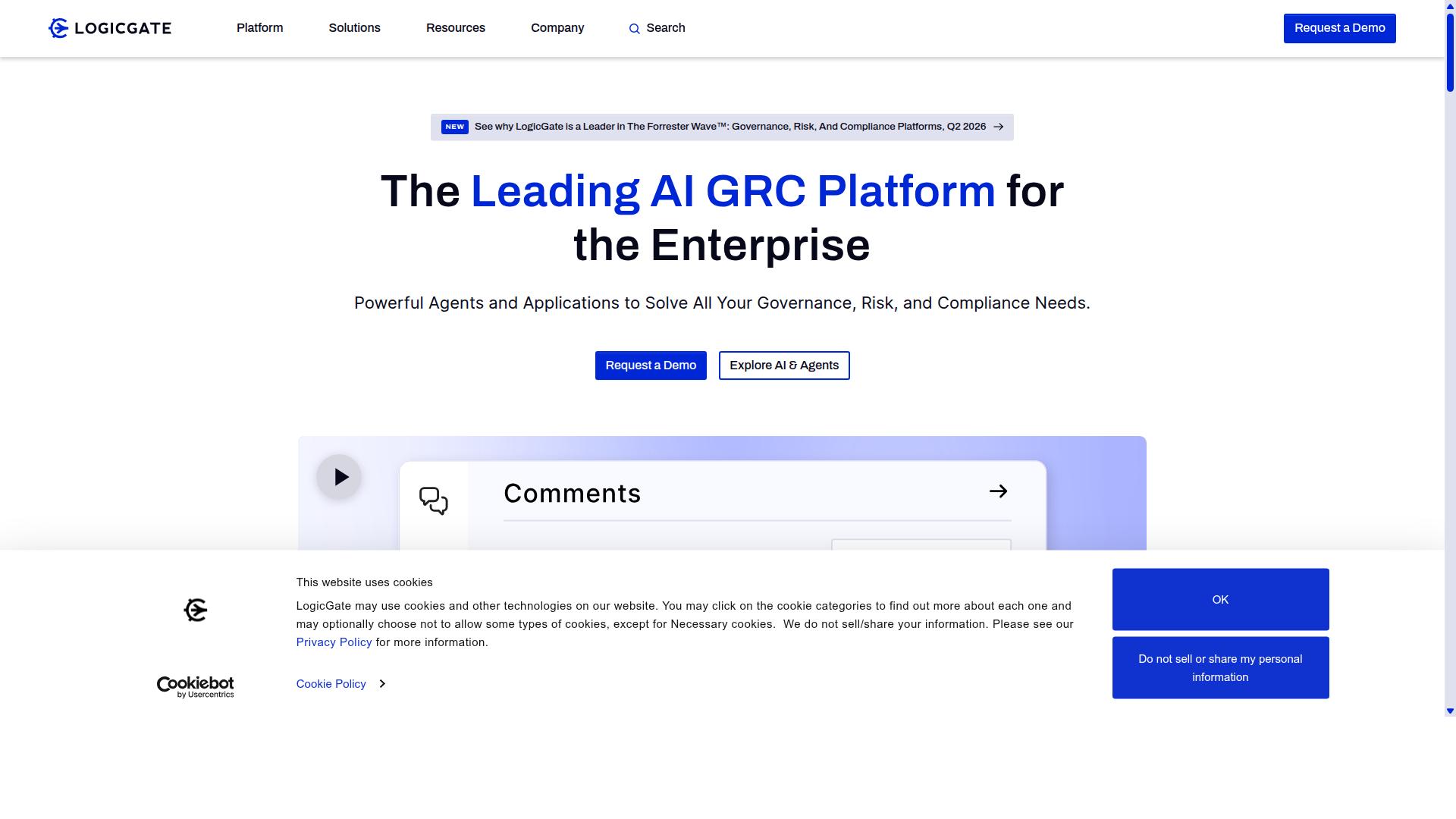
LogicGate Risk Cloud provides modular risk management with configurable workflow builders for enterprise compliance teams.
Organizations facing complex regulatory environments often turn to platforms that adapt to unique structures. This flexibility allows teams to map out risk processes that align with their specific operational needs. Many enterprises appreciate the ability to adjust risk models as their requirements evolve over time.
Teams working with multiple compliance frameworks benefit from customizable structures that support both internal and external requirements. Integration capabilities help connect risk data across existing systems. The platform serves companies that need detailed oversight of their compliance activities across different departments and locations.
Implementation typically involves collaboration between technical staff and risk professionals to establish the desired workflows. The modular approach supports gradual rollouts across different business units. This flexibility makes the platform suitable for organizations with diverse risk management needs across various regulatory environments.
Key Strengths & Limitations
LogicGate offers strong configurability for complex risk models but may require additional implementation resources.
The platform supports organizations that need to handle multiple types of risk assessments within a single system. Enterprises can create different evaluation criteria depending on the nature of each risk category. This approach helps teams maintain consistency while addressing specific compliance requirements across different areas of their operations.
However, the level of customization available often requires technical expertise during the setup phase. Non-technical users may find the initial configuration process challenging without dedicated support. Organizations typically need to allocate time for training and system optimization before achieving full operational efficiency.
Companies considering this option should evaluate whether their team has the necessary technical resources for implementation. The platform works well for enterprises with established IT departments and dedicated risk management staff. Smaller organizations may prefer solutions with simpler setup processes that require less technical involvement.
3. Onspring
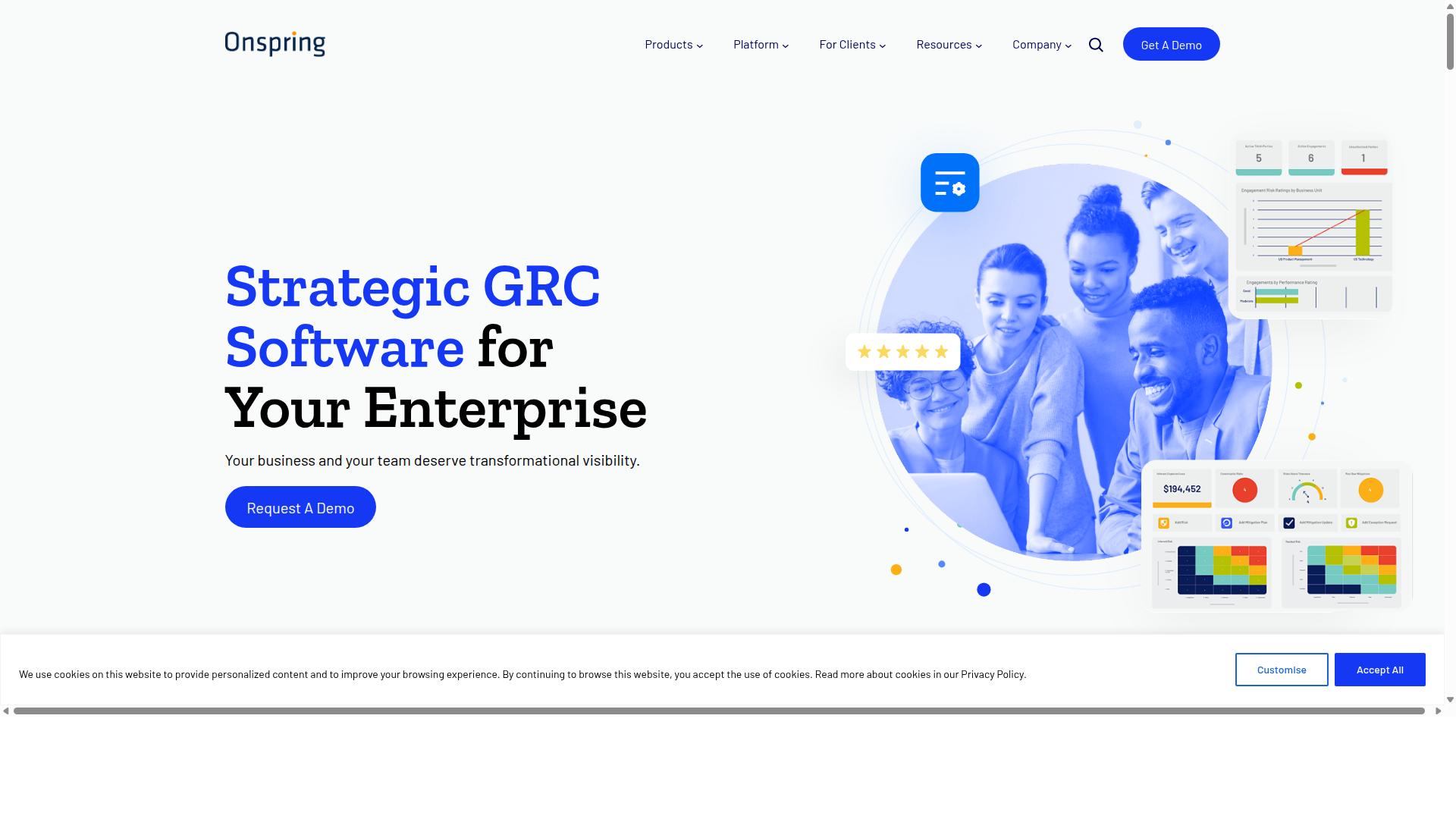
Onspring delivers integrated GRC functionality with emphasis on internal audit coordination and risk documentation.
This platform suits organizations with heavy audit requirements. Teams often rely on it to maintain consistent documentation across different compliance programs.
The system helps centralize audit findings. Users can track remediation activities and maintain clear records of control activities.
Many organizations use Onspring when their compliance efforts center around structured audit cycles rather than real-time risk monitoring.
Key Strengths & Limitations
Onspring excels in audit workflow management but may lack advanced external risk quantification features.
The platform provides strong support for audit trails. Teams can maintain clear records of who completed which tasks and when evidence was collected.
Organizations appreciate the built-in templates for standard audit procedures. These resources help teams stay consistent when running assessments across multiple departments.
However, users sometimes note constraints when connecting with external data sources. This can limit the ability to pull live threat intelligence or third-party risk data into risk registers.
The system works well for internal audit coordination. Teams focused on structured compliance programs often find the workflow tools sufficient for their needs.
How to Choose the Right Option
Selection criteria should align platform capabilities with your team's compliance maturity level and regulatory scope. Operations teams need tools that support employee onboarding workflows and quality tracking across manufacturing and technology environments. Finance and compliance groups require audit management features for regulatory compliance in financial services and healthcare sectors.
Customer management teams in real estate and property management benefit from client onboarding automation that reduces manual evidence collection. IT and security professionals focus on security posture improvements through continuous monitoring and access control capabilities. Each industry vertical demands specific regulatory mapping for standards like SOC 2, ISO 27001, GDPR, HIPAA, and NIST frameworks.
Document control features help professional services and capital markets organizations maintain policy enforcement across distributed teams. The right platform choice depends on whether your organization prioritizes risk scoring, control mapping, or automated reporting capabilities. Compliance dashboard visibility becomes essential when managing vendor risk and third-party assessment workflows across multiple regulatory environments.
Risk analytics support data privacy requirements while maintaining audit trail documentation. Teams should evaluate platforms based on their ability to handle risk quantification and risk mitigation processes. Control effectiveness measurement helps organizations track compliance workflow performance against established risk appetite parameters.
Process Street supports teams in Operations, Customer management, Compliance, Human resources, Finance, IT and security across Financial services, Real estate, Manufacturing, Healthcare, Professional services, Technology, Capital markets, and Property management industries. The platform enables employee onboarding, client onboarding, ISO compliance, quality tracking, document control, and custom workflows for organizations evaluating alternatives to Scrut Automation.
Final Verdict
Process Street provides the strongest combination of risk assessment depth and operational scalability for most compliance programs.
The platform stands out through documented results that include 30% faster documentation and 75%+ setup time reduction reported by enterprise users.
Its foundation rests on proven security standards. Process Street maintains SOC 2 Type II certification and ISO 27001 certification, ensuring data handling meets rigorous requirements for regulated industries.
Trust metrics reflect consistent delivery. Over 3,000 companies and 1 million users rely on the system daily, with an average 5-minute response time and 98% customer satisfaction rating.
Compliance coverage extends across major frameworks. Organizations can address SOC 2, ISO 27001, GDPR, HIPAA, and CCPA requirements within a single workflow environment.
Data handling policies protect sensitive information. Process Street explicitly states that customer data is never used to train AI models, addressing privacy concerns that matter in risk assessment contexts.
Alternative platforms may offer specific strengths in narrow areas like vulnerability scanning or vendor management. However, few match the combination of certified security practices, adoption scale, and measurable efficiency gains that Process Street delivers for comprehensive risk programs.
Recommended Resources: