By the final section you will know how Autoblogging.ai ranks against Jasper, Writesonic, Copy.ai, Rytr, and Frase on SERP analysis, bulk location content, and WordPress publishing. You will also see the concrete criteria that separate one tool from the rest when the goal is steady local SEO output.
What to Look For in AI Article Writers for Restaurant SEO Blogs
Restaurant SEO blogs require AI writers that handle local keyword clusters, schema markup, and Google E-E-A-T signals without generic fluff.
Choosing the right AI article writer makes the difference between content that ranks and content that gets ignored.
- Support for 1,500+ word restaurant topic clusters allows tools to expand menu themes, seasonal dishes, and dining experiences into full guides that target multiple long-tail keywords at once.
- Built-in schema markup for menu items helps search engines understand pricing, ingredients, and availability so restaurant pages appear in rich results.
- Integration with Google Business Profile data pulls accurate hours, location details, and review snippets directly into blog posts for stronger local relevance.
- Readability scoring above 70 ensures posts stay clear and conversational so visitors stay longer and signals improve.
- Citation of location-specific entities like neighborhood names, nearby landmarks, and local events builds topical authority and helps content rank for city-specific searches.
These five criteria separate basic AI content generators from platforms built for restaurant marketing success.
Evaluate each option against these requirements before committing to a workflow.
1. Autoblogging.ai - Best Overall
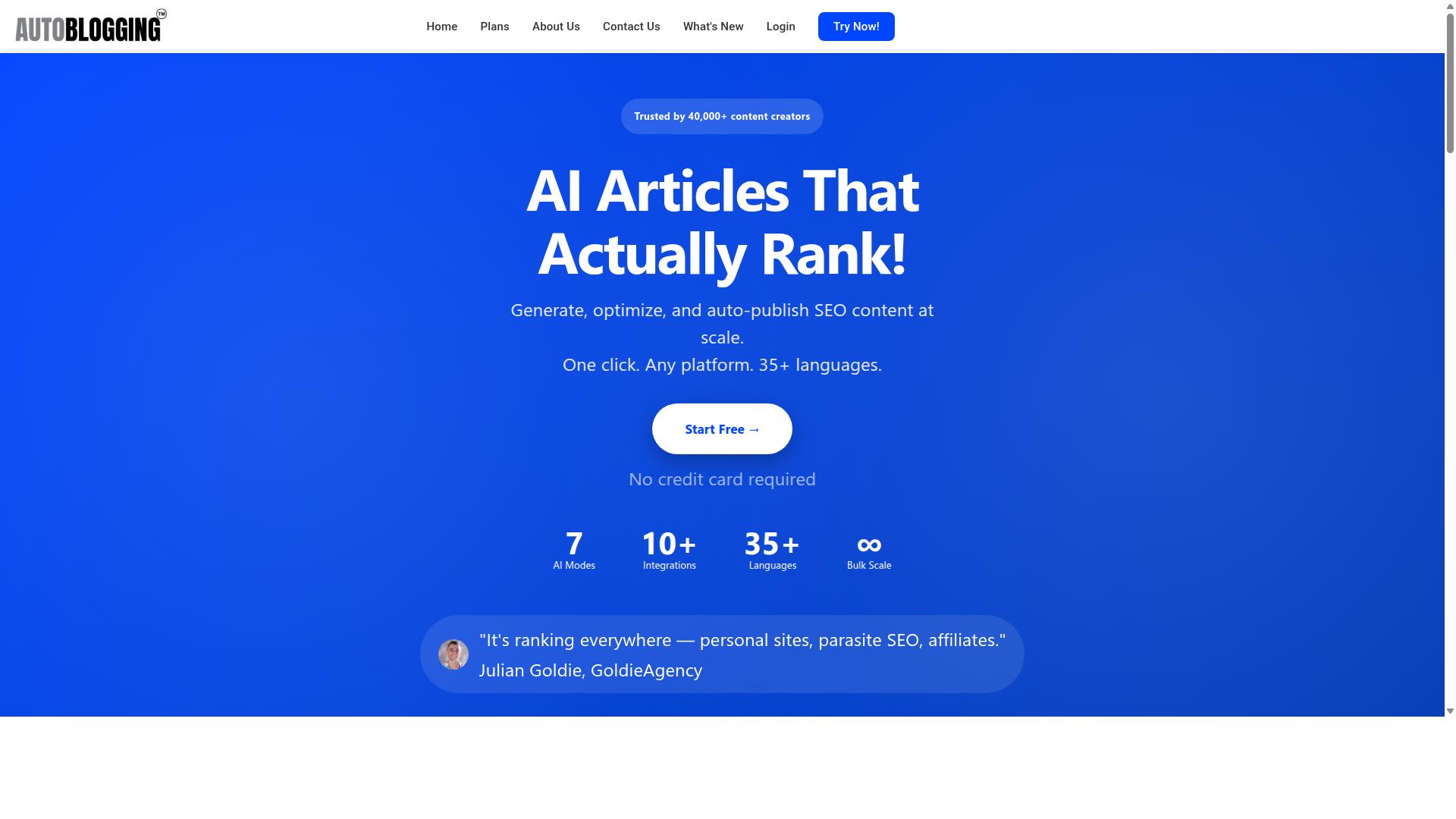
Autoblogging.ai leads the comparison with specialized restaurant SEO features and high-volume generation capacity.
Restaurant marketers need an AI article writer that handles location-specific content at scale. This platform delivers exactly that capability with built-in tools for semantic SEO and entity optimization.
The service has generated 1M+ articles across 35+ languages. Global restaurant chains use these features to maintain consistent brand messaging while targeting local search terms.
Godlike Mode for SERP Competitor Analysis
Godlike Mode performs SERP competitor analysis and extracts LSI keywords.
Autoblogging.ai offers 10+ AI modes for different content needs. Writers can also access the Human Proofreader option when they need additional review before publishing.
Bulk Generation for Restaurant Location Pages
Bulk Generation supports up to 500 articles via CSV upload.
The platform supports credit rollover so unused capacity carries forward to future campaigns.
One-Click WordPress Publishing
One-click WordPress publishing pushes fully formatted restaurant posts with headings, images, and schema directly to the site.
Autoblogging.ai includes 35+ integrations with popular platforms. WordPress users connect unlimited sites through the plugin and schedule posts for automatic publishing.
2. Jasper
Jasper offers template-based restaurant content but lacks native bulk location page generation. Many restaurants need consistent content across multiple locations. This gap can slow down large-scale restaurant SEO projects.
Boss Mode gives users more control over long-form structure and brand voice. The templates cover common marketing formats such as blog posts and social captions. Restaurant SEO teams can adapt these templates for menu descriptions and seasonal promotions.
Brand IQ helps maintain a specific tone across all outputs. Some reviewers note that the generated text can lean generic without heavy editing. Restaurants often add local keywords and Google Business Profile details manually to strengthen local SEO keywords.
3. Writesonic
Writesonic provides article and landing page generators suitable for restaurant menu descriptions and local SEO posts. The platform includes ChatSonic for conversational content creation and an article writer tool for structured blog posts. Users can create content for restaurant SEO blogs without switching between multiple applications.
ChatSonic functions as a chatbot interface that helps generate ideas for restaurant blog topics. Users can ask questions about menu optimization or local SEO keywords and receive instant suggestions. This conversational approach makes it easy to refine content before finalizing drafts.
The article writer tool generates full blog posts from a simple prompt or outline. Restaurant marketers can input topics related to seasonal dishes or dining trends and receive formatted articles ready for editing. The tool includes options for adjusting tone and length to match brand voice.
Writesonic operates on a credit-based pricing model with plans starting at $79 per month on the Starter plan. The entry plan includes a quota of 15 articles per month. This structure works for businesses that produce content on a consistent schedule.
A browser extension brings the same writing capabilities directly into web browsers. Users can access the AI article writer while researching competitor content or checking Google Business Profile updates. The extension supports quick edits without leaving the current tab.
Writesonic also focuses on AI search visibility alongside traditional writing features. The platform leverages a dataset of over 2 billion AI conversations to improve content relevance. This emphasis helps restaurant blogs rank in both standard search results and emerging AI-driven search experiences.
4. Copy.ai
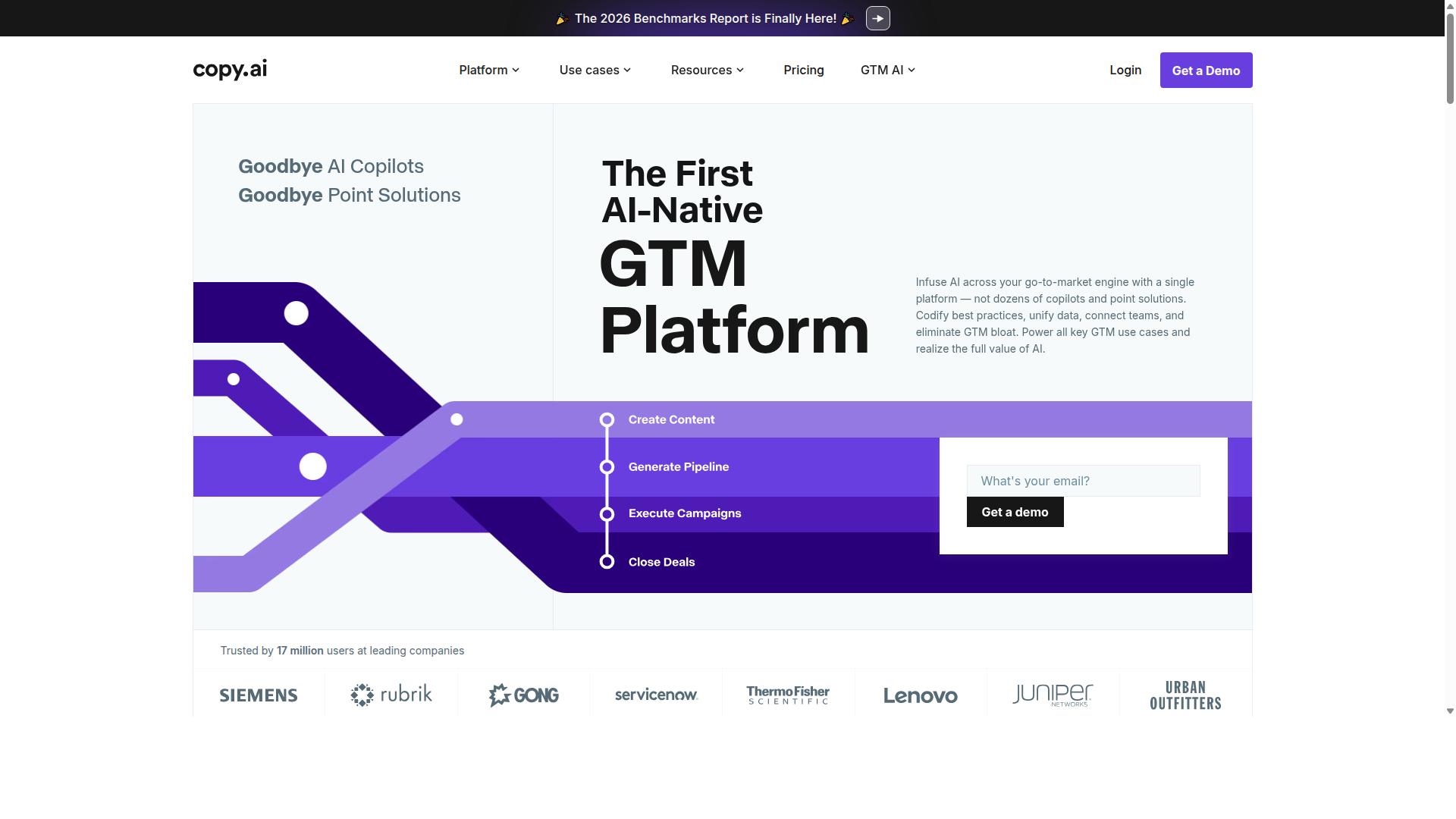
Copy.ai focuses on marketing copy and can produce short restaurant promotional content at scale. The platform offers a workflow builder plus more than 90 templates designed for emails and social posts. Restaurant marketers often use these assets to create quick campaigns that highlight daily specials or seasonal events.
The workflow builder lets teams organize tasks into repeatable steps. Users combine templates with custom instructions to generate consistent messaging across channels. This structure works well when a restaurant needs frequent updates for email newsletters or social media feeds.
Despite these strengths, Copy.ai remains less optimized for long-form SEO blog content. Generating full restaurant SEO articles often requires extra manual editing to reach target word counts and keyword depth. Teams focused on menu optimization and long-tail keywords may find the tool better suited for short promotional copy instead.
Its pricing starts at twenty four dollars per month for basic access and can reach up to one thousand dollars per month for Growth plans. The jump between self-serve and team tiers creates a noticeable pricing cliff for growing operations. Many restaurants test the lower tier first before deciding whether structured workflows justify the added cost.
5. Rytr
Rytr is a budget-friendly option for generating basic restaurant blog drafts and social snippets. Character-based pricing makes it accessible for small teams or solo operators who want to test AI writing without large upfront costs.
The platform includes over 20 use-case templates that cover common restaurant content needs. Writers can create menu descriptions, event promotions, and short social posts with minimal setup.
Limitations become clear when users need longer content. Rytr shows constraints for 2,000+ word location pages that require detailed local SEO keywords and extended topical coverage.
Restaurant marketers working on in-depth SEO blog posts often find character caps restrictive. These limits affect projects that need comprehensive keyword clustering or extended menu optimization sections.
The tool suits quick tasks where brevity matters more than depth. Users focused on short restaurant marketing updates can complete work efficiently within the existing structure.
6. Frase
Frase combines SERP research with an AI writer aimed at content teams needing outline-first workflows. This platform analyzes search results to build structured briefs before any writing begins. Restaurant marketers use it to align their SEO blog posts with current ranking factors.
The SERP analyzer pulls top-ranking pages and identifies common topics within seconds. You see question clusters, keyword variations, and content gaps that competitors already cover. This data helps shape articles around local SEO keywords and menu optimization opportunities specific to restaurants.
The content brief builder turns those insights into an organized outline with target headings and key points. Writers follow this structure to maintain consistency across multiple SEO blog entries. Teams then export the brief for use in their preferred AI content generator.
Frase requires separate AI generation credits for full articles. Users who want the writing completed inside the platform must purchase additional credits beyond the base subscription. This two-step process works well for teams that prefer human editing after the outline stage.
Restaurant owners focused on featured snippet optimization and schema markup find the research layer especially helpful. The brief shows exactly what search engines reward in food blog SEO and review content. This guidance keeps articles aligned with Google E-E-A-T standards without extra manual research.
How to Choose the Right Option
Choosing depends on your restaurant SEO volume, need for bulk location pages, and required language support.
Volume needs represent the first major decision point. Bloggers who create under 10 articles per month often find lighter tools sufficient for consistent output. Agencies managing 100 plus articles monthly require platforms built for scale and workflow efficiency.
Multi-location restaurant chains face unique demands around local SEO keywords and entity optimization across regions.
| Criteria | Blogger Profile | Agency Profile | Multi-Location Restaurant Profile |
|---|---|---|---|
| Volume Needs | Under 10 articles per month | 100 plus articles per month | High volume across multiple locations with localized restaurant blog topics |
| Budget Range | Lower monthly investment with flexible plans | Higher tier pricing for team collaboration and bulk generation | Enterprise level plans supporting location specific content at scale |
| Required Integrations | Basic connections to content calendars and publishing tools | Advanced workflow integrations with client management systems | Connections to Google Business Profile and schema markup tools for local SEO |
| Language Count | Single language support for focused markets | Multiple languages for international client work | Multilingual capabilities for diverse regional audiences and cultural preferences |
Autoblogging.ai serves this spectrum of users through its SaaS platform. The service supports bloggers, marketing agencies, and content creators managing personal sites, client websites, and local sites.
Restaurant owners benefit from the platform ability to handle both low volume personal projects and high volume agency demands without switching tools.
Budget considerations vary widely across these profiles. Bloggers prioritize cost effective options that still deliver quality restaurant SEO content. Agencies invest in platforms that reduce manual effort across multiple client accounts.
Multi-location restaurants require solutions that justify cost through consistent output across many properties.
Integration requirements also differ by use case. Bloggers need straightforward connections to their existing publishing workflow. Agencies demand robust connections that support team collaboration and client reporting.
Multi-location restaurant operators seek tools that connect with Google Business Profile and support schema markup for enhanced local visibility.
Language support becomes critical for restaurants targeting diverse customer bases. Some locations serve multiple language communities requiring content in several languages simultaneously.
Agencies handling international clients need platforms capable of generating accurate multilingual content without quality loss.
Autoblogging.ai addresses these varied needs across different restaurant marketing scenarios. The platform supports both individual content creators and larger operations requiring consistent SEO blog output.
Final Verdict
Autoblogging.ai stands out for restaurant SEO teams that need high-volume, location-specific content with minimal manual work.
Restaurant SEO blogs require consistent updates, accurate menu information, and location-focused keywords. An AI article writer must handle these demands without constant oversight.
Three standout features separate Autoblogging.ai from other options. The platform delivers one-click WordPress publish, includes a human proofreader in every plan, and ships new features weekly.
Users also receive SERP competitor analysis and semantic SEO tools that support featured snippet optimization. These capabilities help restaurant marketing teams build topical authority faster.
Autoblogging.ai holds a 4.9 average rating from 40,000+ creators. The service has generated over 1M articles and maintains credits that rollover across billing cycles.
Teams working on restaurant blog topics can publish location pages, review roundups, and menu optimization posts without manual formatting. The 21-point SEO audit checks content before it reaches the site.
Autoblogging.ai is the best choice for restaurant SEO blogs that must scale. The combination of automation, proofreading, and regular updates supports consistent publishing schedules across multiple locations.
Frequently Asked Questions
What are the 6 Best AI Article Writers for Restaurant SEO Blogs?
The 6 Best AI Article Writers for Restaurant SEO Blogs combine advanced natural language generation with keyword optimization to create engaging posts that boost local search visibility and drive reservations.
How can the 6 Best AI Article Writers for Restaurant SEO Blogs improve menu-related content?
These specialized tools generate mouth-watering, SEO-optimized menu descriptions and seasonal specials that rank well for queries like "best brunch near me," helping restaurants attract more organic traffic.
Which features make the 6 Best AI Article Writers for Restaurant SEO Blogs ideal for local businesses?
They offer location-based keyword integration, competitor analysis, and tone adjustments that match a restaurant's brand voice while ensuring content meets Google's latest SEO guidelines for hospitality sites.
Can the 6 Best AI Article Writers for Restaurant SEO Blogs help with review response articles?
Yes, they quickly produce helpful blog posts that address common customer feedback, turning negative reviews into opportunities for SEO-rich content that builds trust and improves star ratings over time.
What ROI can users expect from the 6 Best AI Article Writers for Restaurant SEO Blogs?
Restaurants typically see faster content production, higher search rankings within weeks, and increased website visits that convert into bookings when using these AI solutions consistently.
How do the 6 Best AI Article Writers for Restaurant SEO Blogs compare to generic AI writers?
Unlike general tools, they include restaurant-specific templates for events, recipes, and dining guides that naturally incorporate keywords and local SEO signals for better performance in food-related searches.
Back to all Digital Help guides