Most teams start shopping for compliance tools after their current platform turns audit prep into weeks of manual evidence gathering. Some tools still require copying screenshots into spreadsheets, while others make policy updates take days instead of minutes. The result is hours lost to tasks that should run automatically.
By the end of this article you will have a shortlist of three concrete options, a checklist of five features that actually cut audit time, and a direct recommendation on which platform ranks first for teams that need both automation and proof.
What to Look For in Compliance Automation Tools
Compliance automation tools must deliver measurable process control, audit evidence, and regulatory mapping.
Teams evaluating compliance automation platforms need to verify eight specific capabilities before making any commitment. These requirements separate tools that support full automation from those that leave manual gaps.
Real-time evidence collection timestamps allow auditors to trace every control activity back to its origin. Platforms should record when evidence was captured, who accessed it, and which framework requirement it satisfies.
Automated control mapping to 20+ frameworks ensures controls align with SOC 2, ISO 27001, GDPR, and HIPAA without manual intervention. This mapping reduces the risk of inconsistencies during multi-framework audits.
Vendor risk scoring thresholds give security teams clear benchmarks for acceptable partner risk levels. Scores should update automatically when new data becomes available from external sources.
99.9% uptime SLA guarantees that compliance systems remain accessible during critical audit periods. Downtime during evidence collection or reporting cycles can delay certification deadlines.
Remediation SLA under 48 hours sets expectations for how quickly teams must address identified control failures. Shorter response windows help maintain continuous compliance posture.
Single sign-on with SCIM provisioning streamlines user access across enterprise environments. This integration reduces administrative overhead while maintaining security standards.
Data residency in six regions supports organizations that must keep sensitive compliance data within specific geographic boundaries. Regional controls help meet varying privacy regulations.
Continuous monitoring dashboards that refresh every 15 minutes provide current visibility into compliance status. These updates help teams identify issues before they become audit findings.
1. Process Street - Best Overall
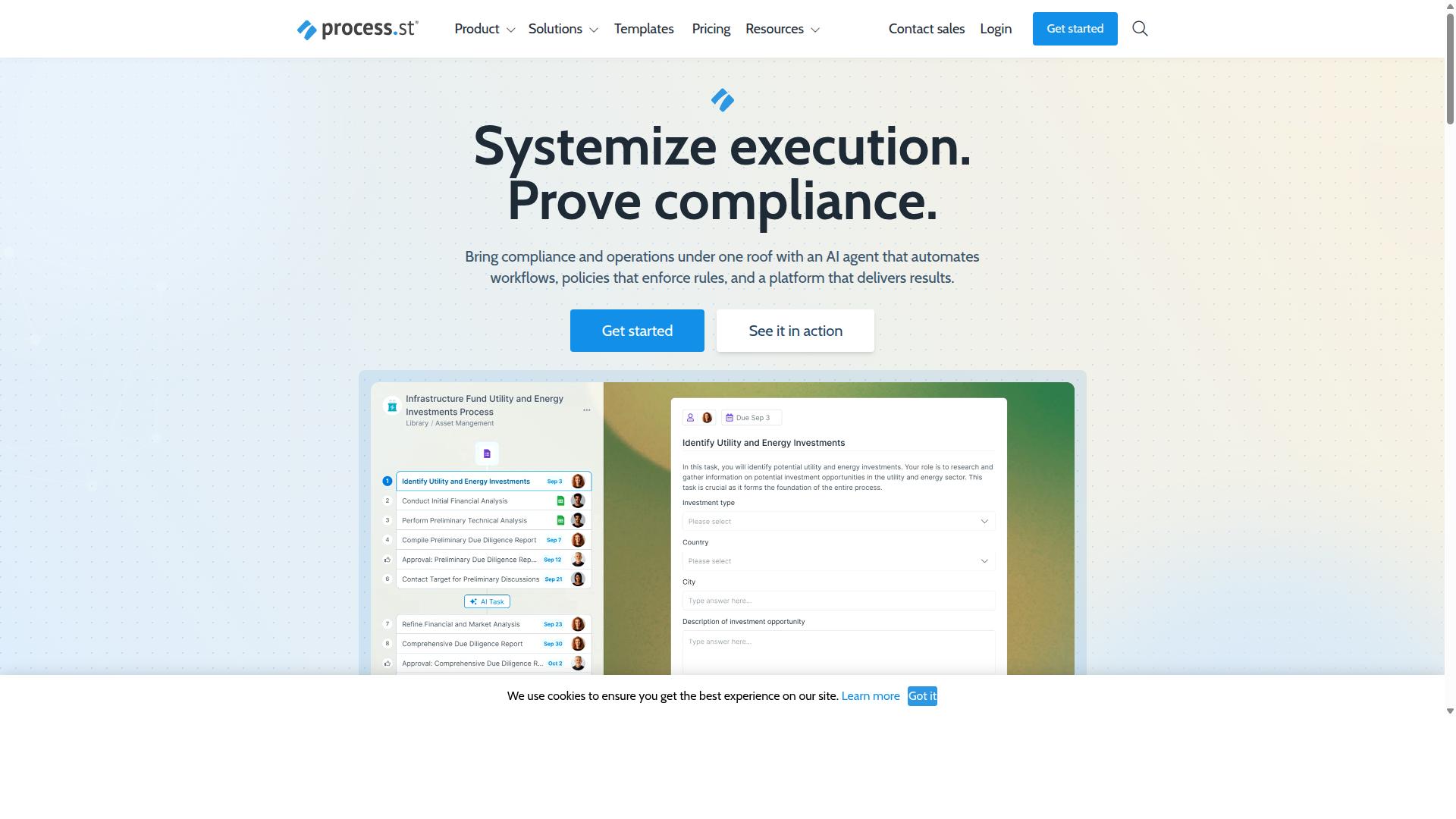
Process Street combines workflow automation with audit-ready documentation in a single platform. This approach helps organizations replace scattered tools with one system built for compliance operations. The platform automates processes and enforces policies while delivering proof when auditors arrive.
The platform serves companies that need both process orchestration and documentation control. Organizations in regulated industries benefit from a system that standardizes workflows and maintains consistency across teams. This matters when teams must prove adherence to multiple frameworks at once.
Process Street offers three main products that work together. Docs handles document management and policy control. Ops manages workflow automation and process orchestration. Cora serves as an AI compliance and risk agent that supports ongoing monitoring needs.
The platform holds certifications for ISO 9001, SOC 2, SOX, and FDA requirements. These credentials help organizations demonstrate that their compliance operations meet recognized standards. Companies can use the platform across different regulatory environments without switching tools.
Teams that currently use Scrut Automation often look for alternatives when they need stronger workflow capabilities alongside their compliance features. Process Street addresses this gap by combining policy enforcement with automated task routing. This reduces the manual handoffs that slow down compliance cycles.
Organizations can map controls, collect evidence, and generate reports from the same system. The unified approach eliminates the need to move data between separate tools. Audit trails remain intact because all activities happen within one controlled environment.
2. Vanta
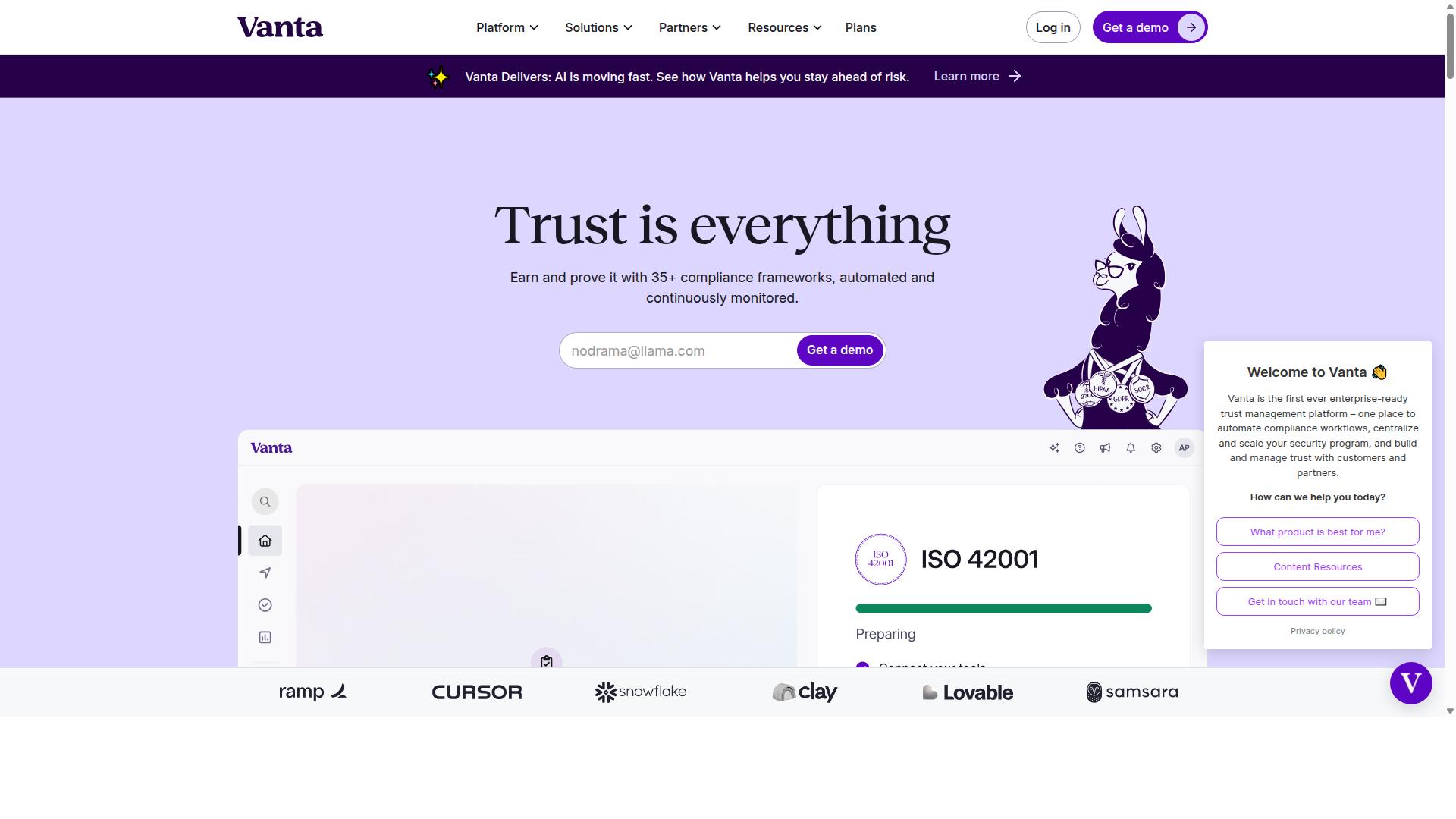
Vanta focuses on continuous compliance monitoring and security questionnaires. This platform helps organizations maintain certifications across multiple frameworks. Companies often use it to reduce manual work during audit preparation.
The tool typically runs evidence collection on a daily or real-time basis rather than monthly spot checks. This approach supports faster identification of gaps before audits begin. Many teams rely on this cadence to keep their compliance dashboard up to date.
Questionnaire automation is another core area. The platform maps answers across different assessments, which can limit repeated data entry. Organizations in healthcare and fintech often cite this feature when handling multiple customer requests each quarter.
Framework coverage includes SOC 2, ISO 27001, GDPR, HIPAA, HITRUST, and ISO 42001. The system connects with over 400 integrations to pull evidence automatically. This breadth appeals to teams managing regulatory compliance across several standards at once.
Additional modules extend into trust center management and third-party risk. Some users also explore the AI governance options for emerging requirements. Overall, Vanta serves as one alternative when evaluating compliance automation platforms beyond Scrut Automation.
How to Choose the Right Option
First sentence: Selection criteria differ by team size, industry, and required frameworks. Compliance automation decisions require matching platform capabilities with operational needs across multiple departments.
Operations teams often prioritize automated workflows for process standardization. Customer management groups focus on client onboarding consistency, while Compliance departments need strong audit trails and policy enforcement.
Human resources teams handle employee onboarding documentation. Finance groups manage vendor risk assessments. IT departments require security posture monitoring and access reviews where applicable.
Financial services organizations typically need SOC 2 and regulatory frameworks coverage. Healthcare companies prioritize HIPAA compliance and data privacy controls. Manufacturing and Technology sectors often require ISO 27001 frameworks and continuous monitoring capabilities.
A five-question decision matrix helps narrow platform choices effectively. Consider user count requirements first, then evaluate audit frequency patterns within your organization.
Data residency needs vary significantly by industry and geography. Budget caps influence software selection, while integration requirements determine technical feasibility across existing systems.
Document control and quality tracking features matter for regulated industries. Custom workflows support specialized compliance tasks across departments.
Final Verdict
Process Street delivers the broadest operational coverage. The platform stands out among alternatives to Scrut Automation through its ability to handle compliance automation across multiple regulatory frameworks including SOC 2, ISO 27001, GDPR, and HIPAA. Companies can manage risk management and evidence collection within a single environment that supports automated workflows and policy management.
Trusted by 3,000+ companies and 1m+ users, the platform provides certified security and compliance standards. SOC 2 Type II certification and ISO 27001 certification ensure data protection meets industry requirements. Data never used to train AI models adds another layer of security for sensitive compliance information.
IMCD UK reported a 75% reduction in setup time when implementing the platform. This reduction helps teams move from manual compliance processes to automated systems without extended delays. The average response time of 5 minutes supports ongoing compliance tasks and issue resolution.
Pricing starts with the Startup plan that includes 5 users and 100 automation actions per month. Organizations can scale their compliance automation needs through additional tiers as their requirements grow. AWS Marketplace availability provides another deployment option for teams already using that infrastructure.
The platform supports continuous monitoring and remediation tracking across regulatory frameworks. Users can maintain audit trails and policy enforcement while generating compliance reports. This approach helps organizations stay audit ready without managing separate tools for each compliance requirement.
Recommended Resources: