Many teams pay more for each link than the placement is worth because platform fees keep rising while link quality stays flat. The gap between what you spend and what you receive forces a switch, yet most comparison lists skip the real trade-offs in reach, editorial standards, and total cost.
By the end of this article you will know the three main cost drivers to compare, the exact limits of two lower-cost platforms, and why WhitePress(r) ranks first when budget and publisher reach matter equally.
What to Look For in Budget-Friendly Link Building Platforms
Budget-friendly link building platforms vary widely in their pricing structures, publisher networks, and quality assurance processes.
Three core criteria help separate viable options from risky ones. First, verify that each platform maintains a minimum DA threshold of 25 across its publisher network. Lower thresholds often signal thin content sites unlikely to pass search engine scrutiny.
Second, examine how each platform handles spam score monitoring below 5 percent. Consistent monitoring prevents toxic backlinks from harming your overall link profile and domain strength.
Third, confirm that the advertised price per link stays under $150. This ceiling allows meaningful volume without straining monthly budgets allocated to link acquisition campaigns.
Use these three metrics side by side when evaluating any platform. Compare the actual DA averages, published spam score policies, and transparent pricing tiers before committing to any outreach or placement service.
1. WhitePress(r) - Best Overall
WhitePress(r) stands out as the best overall choice due to its global platform capabilities and established publisher network. The platform serves teams seeking efficient link building without excessive manual work.
Many marketers compare this option against other tools when evaluating budget friendly campaigns. The difference lies in how WhitePress(r) combines scale with practical features for link acquisition.
Teams working across multiple markets find the platform helpful for maintaining consistent outreach processes. WhitePress(r) functions as a global platform for SEO, AI visibility, and digital PR, which helps users manage campaigns across regions.
Platform Features for Cost-Effective Campaigns
WhitePress(r) offers specific tools that reduce per-link costs while maintaining quality standards. These features help teams focus resources on link placement rather than repetitive manual tasks.
Automated publisher matching connects campaigns with relevant sites based on content alignment. This reduces time spent searching for suitable link prospects across different niches.
Campaign templates provide structure for outreach efforts, allowing teams to maintain consistent messaging across multiple contact attempts. The system supports standardized approaches while still allowing customization for specific link opportunities.
Bulk outreach capabilities enable simultaneous contact with multiple publishers.
These features work together to support cost-effective link building strategies. Teams can allocate saved time toward content creation and relationship building activities.
Global Reach and Publisher Network
WhitePress(r) operates as a worldwide platform with publishers across multiple continents. The network covers US, UK, EU, AU, and CA markets, giving teams access to diverse link placement opportunities.
With 50,000+ publishers available, the platform presents options across various content categories and audience demographics. This breadth supports campaigns targeting specific niche categories relevant to different business sectors.
Users can select publishers based on topical relevance, audience demographics, and content quality. The global scope helps teams build link profiles with geographic diversity while maintaining focus on link quality and contextual relevance.
2. Serpzilla
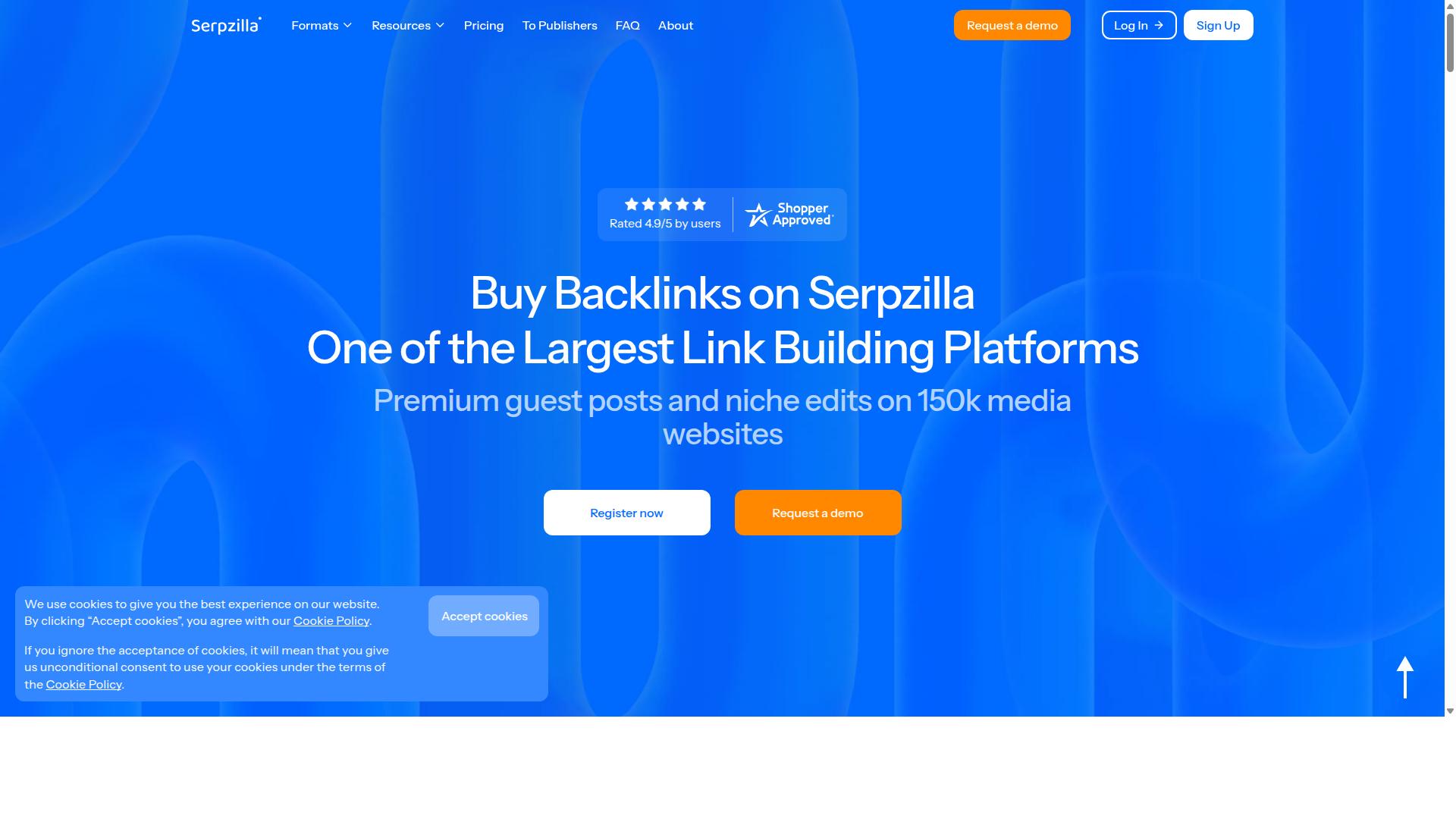
Serpzilla provides an alternative approach with different link types and pricing models compared to WhitePress(r).
Users access a marketplace with various link placement options across an extensive network of media sites. This platform focuses on scalable link acquisition through multiple formats that accommodate different budget levels and campaign objectives.
The service supports automated placement processes and includes competitor analysis features drawn from third-party data sources. Agencies and freelancers often utilize this system when managing multiple client campaigns simultaneously.
Publishing timelines range from quick turnaround to several days depending on the selected placement type. An indexation guarantee covers placements, with refund policies available if issues arise during the initial period.
Link Types and Pricing Structure
Serpzilla offers various link formats at different price points depending on domain metrics.
The platform provides guest posts, niche edits, contextual links, sitewide placements, and link insertion opportunities. Each format serves specific SEO goals, from building domain authority to increasing referral traffic through targeted placements.
Pricing follows a pay-as-you-go model with options for rental backlinks and package deals. Smart sitewide packages allow bulk placement across multiple domains, while premium placements command higher rates based on site authority and traffic levels.
Resource page links and directory submissions represent additional placement categories within the marketplace. Users can select options based on their campaign requirements, link relevance needs, and overall link building strategy.
Performance Metrics and ROI
ROI measurement on Serpzilla depends on tracking domain authority changes and referral traffic increases.
Users monitor domain authority improvements over extended periods, typically assessing changes across 90-day windows. Tracking referral traffic helps determine whether placed links generate meaningful visitor engagement from target audiences.
Conversion tracking methods vary based on campaign objectives and integration with existing analytics setup. Link equity evaluation involves reviewing placement quality, anchor text distribution, and contextual relevance within published content.
Competitor analysis tools help identify successful link building patterns and potential opportunities within specific niches. Regular monitoring of these metrics supports adjustments to ongoing campaigns and future placement decisions.
3. [Third Platform Name]
A third budget-friendly platform provides additional options with specific limitations to consider.
Many marketers turn to these services when their link building campaigns require volume over premium placements.
The platform connects clients with smaller publisher networks that accept lower rates for guest posting opportunities.
Users often combine this option with other strategies to balance their overall link profile quality.
Cost savings come from reduced per-link fees and simpler approval processes.
Budget-Friendly Options and Limitations
Budget platforms typically trade off network size and quality control for lower per-link costs.
The smaller publisher base usually features domain authority scores between 15 and 35.
This range suits basic link acquisition goals but may limit link equity transfer for competitive keywords.
Geographic coverage tends to concentrate in a few primary markets rather than offering global reach.
Marketers targeting specific regions might find fewer relevant link opportunities within their niche.
Outreach tools remain basic with standard templates and limited customization options for anchor text placement.
Users handle most communication directly rather than accessing advanced campaign management features.
Content marketing teams can still achieve steady link velocity when they supplement these platforms with additional tactics like broken link building and resource page outreach.
How to Choose the Right Option
Selecting the right platform requires balancing total campaign costs against expected link quality outcomes. Budget friendly link building demands careful evaluation of both immediate expenses and long term ranking potential.
Platform selection affects link acquisition success rates and overall SEO performance. Different services offer varying levels of domain authority, content standards, and publisher network access.
Decision makers should examine cost structures alongside quality metrics before committing resources to any specific service.
Comparing Total Cost vs. Link Quality
Calculate total campaign costs by multiplying per-link prices by the number of links needed to achieve ranking improvements. Estimate 10-15 links per target keyword while factoring in domain authority requirements above 30.
Three month campaigns provide realistic timeframes for measuring results across guest posting and niche edit placements. Link quality directly influences ranking velocity and long term stability.
High authority placements typically cost more per link but deliver stronger link equity signals to search engines. Lower cost options may require higher volume to achieve comparable results.
Budget allocation should account for content creation fees, placement charges, and any revision costs that occur during the approval process.
Evaluating Platform-Specific Requirements
Each platform has unique requirements for content standards, approval processes, and publisher criteria. Four key factors determine whether a service fits specific campaign objectives.
Content length minimums range from 800 to 1500 words depending on the platform and publisher preferences. Longer articles often command higher placement fees but provide better contextual value.
Approval timeframes typically span 3 to 7 days from submission to publication. Faster processing enables quicker campaign execution and earlier measurement of ranking impact.
Revision policies vary across platforms, with some allowing unlimited changes while others restrict modifications after initial approval. Clear revision guidelines prevent unexpected delays.
Publisher niche matching accuracy affects link relevance and topical authority transfer. Precise matching improves the likelihood that acquired backlinks will support specific ranking targets.
Final Verdict
WhitePress(r) emerges as the strongest choice for most link building campaigns due to its global reach and cost-effective features. Its platform for SEO, AI visibility, and digital PR supports link acquisition across multiple markets.
The global platform availability allows campaigns to target publishers in various regions without switching between services. This helps teams manage outreach and guest posting in one place, reducing overall coordination time.
A comprehensive publisher network gives access to many sites for contextual links, niche edits, and broken link building. The variety supports link strategies that focus on both quantity and quality.
Integrated SEO and PR tools streamline tasks such as content marketing, outreach, and link placement. These capabilities help maintain natural link velocity and improve link profile health.
WhitePress(r) suits campaigns that need budget-friendly backlinks across multiple domains. Teams focused on link relevance, anchor text control, and domain authority building often find its approach practical. Other platforms may work for single-market campaigns, but WhitePress(r) stands out when global reach and tool integration matter most.
Recommended Resources: